Key Takeaways
- Chain-Key Tokens Solve Cross-Chain Problems: ckBTC and ckUSDT use ICP’s chain-key tech to make safe twins of BTC and USDT. They fix issues like high transaction fees, slow finality, and risky bridges, letting assets move fast and cheap without middlemen.
- ckBTC Brings Bitcoin to ICP: As a 1:1 backed twin of BTC, ckBTC offers 1-2 second transactions at tiny costs (less than a penny). Minting and burning is controlled through smart contracts, which means any user can convert between BTC and ckBTC without any reliance on a third party.
- ckUSDT Boosts Stablecoin Use: This ERC-20 twin of USDT provides sub-second finality and low fees on ICP. With minting and burning processes similar to those of ckBTC, the two pair well for liquidity pools and payments, keeping USDT’s steadiness while adding safety.
- Better Than Wrapped Assets: Unlike WBTC or bridged USDT, these tokens avoid gatekeepers and centralized bridges via smart contracts and threshold signing. They lead in speed, cost, and security, making multi-chain work smoother.
- Ecosystem Growth and Links: Projects like Odin Fun ($1B+ trades), Omnity ($600M TVL), Liquidium ($5B loans), and Oisy Wallet show real use. They link Bitcoin to Cosmos and Ethereum, with strong 2025 stats like high daily transactionsand new holders.
- Risks Are Managed: ICP’s chain-fusion architecture eliminates the need for middlemen and bridges. The security architecture of the network is constantly evaluated and improved, such as with the rollout of secure virtualization technologies in early 2026.
- Bright Future Ahead: With Chain Fusion expanding to more chains and linking with ICP’s on-chain AI capabilities, these tokens could change global finance, offering easy DeFi entry and quantum-safe updates for long-term growth.
A New Way for Blockchains to Work Together
In the world of blockchain, the Internet Computer Protocol (ICP), built by the DFINITY Foundation, has become a game-changing force. It runs smart contracts at web speed and offers endless growth. This “world computer” idea is not just a tech dream—it’s a fix for big problems in moving assets between chains, like safety risks, high costs, and slow finalization times.
Chain-key tokens are the key part of ICP’s unique features. They use advanced chain-key signatures to make safe, trust-free twins of assets from other blockchains. This guide looks closely at two main examples: ckBTC, a decentralized copy of Bitcoin (BTC); and ckUSDT, a chain-key variant of Tether’s USDT stablecoin. These tokens are more than tech—they are changing DeFi, payments, and multi-chain systems by blending Bitcoin’s strong value store with stablecoin’s easy use.
ckBTC launched in 2023 and quickly became a core part of ICP. It was later complemented with ckERC20 tokens like ckUSDT. These tokens are backed 1:1 by their real assets and use ICP’s chain-key signing technology for smooth swaps without middlemen. This setup avoids the weak points of old bridges—those that caused billions in losses from hacks.
By November 2025, ckBTC has over 10,000monthly active addresses and millions in daily transactions, while ckUSDT acts as a liquidity pillar in ICP’s growing DeFi space, boosting stablecoin trades. Through these tokens, ICP is not just another blockchain; it is turning into a hub that links Bitcoin, Ethereum, and other networks, letting builders make safer and faster apps.
ckBTC: Bitcoin’s Fresh Start on ICP
The Tech Core and How It Works
ckBTC is basically a mirror token of Bitcoin on the ICP network. It follows ICRC-1 and ICRC-2 standards strictly and is backed 1:1 by real BTC. This design drops the old wrapped token style like WBTC, which often relies on easy-to-hack central bridges. Instead, ckBTC uses the heart of chain-key signatures—threshold ECDSA signing—to let ICP nodes sign Bitcoin transactions together. This creates direct on-chain links without a single weak spot. The system ensures transactions are atomic and safe: users send BTC to a special address controlled by the minter, the system waits for Bitcoin confirmations, then mints an equal amount of ckBTC. While the ckBTC minting takes about 1 hour due to the slow finality of the Bitcoin mainnet, every subsequent transaction (on ICP) then just takes approximately 1 second.

(Source:Medium)
Behind the scenes, ckBTC relies on two main canisters: the ckBTC Minter (ID: mqygn-kiaaa-aaaar-qaadq-cai) handles minting and burning, checks transactions, and scans for tainted addresses to stop bad funds; the ckBTC Ledger (ID: mxzaz-hqaaa-aaaar-qaada-cai) manages account balances, token transfers, and auto-saves old data for easy searches (the ledger is searchable thanks to the index canister). This setup turns ckBTC into Bitcoin’s “virtual Layer 2.” Users can easily get back to BTC by a simple smart contract call and without bridge worries. Picture this: a Bitcoin settlement that might take 10-60 minutes now happens in a flash on ICP—this is not just faster; it’s a rebuild of the system.
Real Benefits and Use Cases
The appeal of ckBTC comes from mixing Bitcoin’s built-in strength—as a reliable store of value —with ICP’s speed. Transfer fees are fixed at 0.0000001 ckBTC ( less than a penny), enabling tiny payments and fast DeFi, while Bitcoin’s own network does not support these due to high transaction cost and slow finality. More key, ckBTC’s decentralized build cuts risks of rug pulls or hacks—all actions are checkable on-chain, with built-in scans for tainted BTC to keep things clean.
In real use, ckBTC fits into many areas. For example, in DeFi platforms, it supports trust-free Bitcoin business: users run lending or yield farms right in ICP smart contracts without outside gatekeepers. This lowers risks and opens new ways for Bitcoin in use cases such as in DeFi. ckBTC’s linking power makes it a bridge from Bitcoin to other chains, driving fresh ideas from payments to trading, and borrowing and lending.
ckUSDT: Stablecoins in the Cross-Chain Age
Main Structure and New Ideas
ckUSDT is part of the ckERC20 family—a 1:1 copy of Ethereum’s USDT that follows ICRC1 and ICRC-2 standards. It takes the best of chain-key signatures to skip old bridge pains—those that lost huge sums from safety holes. The system uses the ckETH Minter (ID: sv3dd-oaaaa-aaaar-qacoa-cai) to handle deposits and withdrawals, smartly managing ETH fees for ERC-20 work; the Ledger Suite Orchestrator (ID: vxkom-oyaaa-aaaar-qafda-cai) manages the token ledgers for all ERC-20 twins on ICP, and adding new tokens is performed easily via governance votes. Ethereum’s Helper contract (address: 0x6abDA0438307733FC299e9C229FD3cc074bD8cC0) helps cross-chain tasks, so users send USDT to a set address, triggering mints on ICP, while withdrawals burn ckUSDT first before freeing the real asset.
(Source:X )
This setup lets ckUSDT achieve sub-second finality on ICP, with fees as low as a fraction of a penny—far faster and cheaper than performing the same transaction on Ethereum. Most importantly, it keeps USDT’s steadiness while boosting safety—all transactions checkable on-chain, cutting bridge attack risks. Creating twins of further ERC-20 tokens can simply be done by community rule, ensuring fair and lasting growth.
Benefits in Action and System Fit
The real value of ckUSDT is how it pairs with ckBTC to make a full DeFi loop. Its low costs and quick settlements make it perfect for payments and trades: users shift multi-chain assets smoothly in ICP wallets without cross-chain fears. In practice, ckUSDT often teams with ckBTC for liquidity pools or stablecoin loans, like building Bitcoin-stablecoin pairs on DEXes such as ICPSwap. This boosts volume and lets builders try complex money add-ons.
Compared to old wrapped USDT, ckUSDT’s low-trust model stands out in multi-chain spots—it is not just a stablecoin; it is ICP’s door to Ethereum liquidity, driving wide use from daily transactions to big DeFi.
Comparing ckBTC and ckUSDT: Better Than Old Wrapped Assets
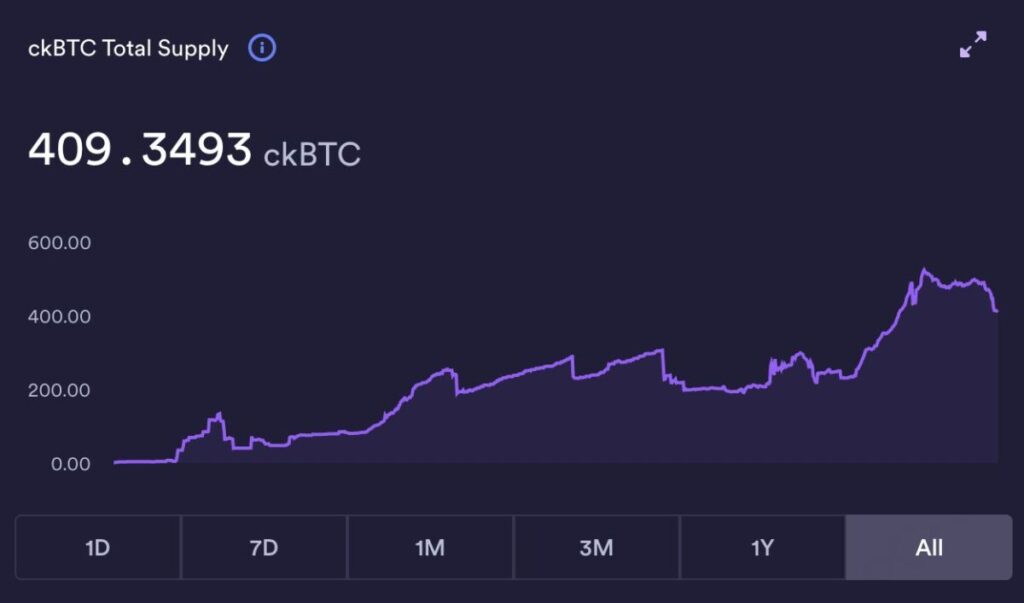
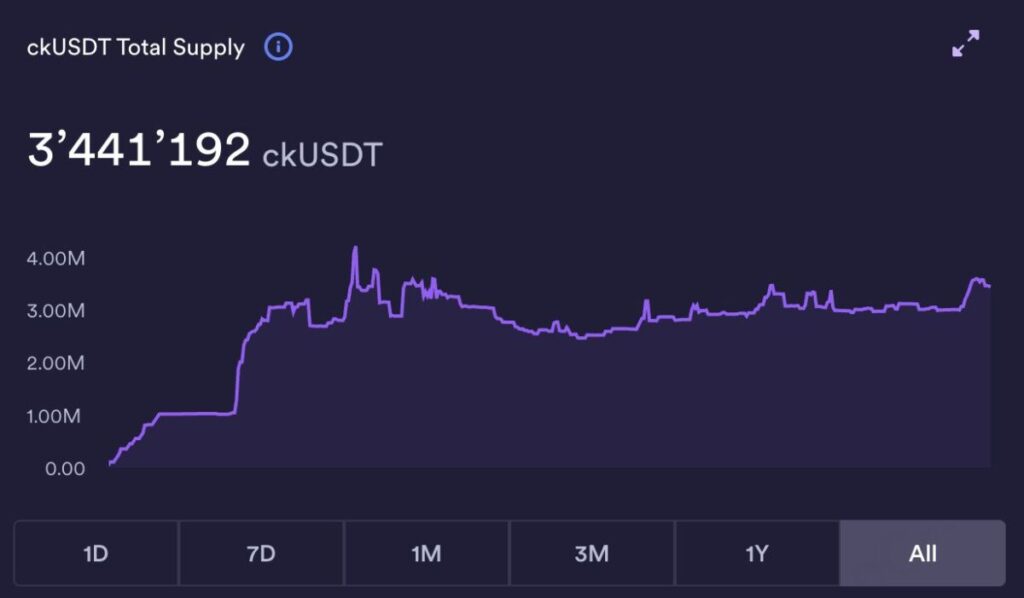
Though ckBTC and ckUSDT share chain-fusion fundamentals, they differ in focus: ckBTC supports Bitcoin’s UTXO model, built on ICP’s native integration with the Bitcoin network; ckUSDT fits Ethereum’s account model via ckETH minter, abstracting Ethereum’s complex gas model for transactions.
(Source:ICP)
This gap makes ckBTC stronger in Bitcoin DeFi, while ckUSDT shines in stablecoin flow. In contrast, old wrapped assets like WBTC or bridged USDT rely on gatekeepers and bridges, with weaker safety—ICP’s no-bridge architecture via threshold signing gives top protection, a big driver in a time of frequent bridge hacks. Overall, these chain-key tokens lead in settlement times (1-2 seconds vs. minutes), costs (tiny and stable vs. network-based), and safety (threshold signing vs. centralized custody), marking cross-chain tech’s growth.
Ecosystem Links: From Bitcoin to Multi-Chain Bridges
Key Projects Overview
The use of ckBTC and ckUSDT is not alone—they are deeply part of ICP’s DeFi world and spread to wider Bitcoin and cross-chain areas. Take Odin.Fun: this Bitcoin memecoin launch pad has over $1 billion in total trading volume. It uses ckBTC’s quick settles for 2-second trades, letting memecoin systems thrive on ICP. Though it faced a hack once, the platform bounced back fast with stronger safety checks. Omnity, a top cross-chain base, has TVL over $600 million and links ckBTC to Cosmos spots like Osmosis for trust-free multi-chain flow—this boosts Bitcoin’s use and opens doors for Runes and BRC-20 tokens.
Lending and Wallet Uses
Liquidium shows new ideas in lending: this biggest Bitcoin loan platform Liquidium.wtf has handled over $5 billion in deals. Its new cross-chain borrowing and lending protocol Liquidium.fi relies heavily on ckBTC and ckUSDT to avoid bridge risks, allowing users to borrow money on other chains against their Bitcoin assets. Oisy Wallet, made by the DFINITY Foundation, makes things easier for users: this multi-chain wallet supports ckBTC, ckUSDT, and mainnet assets like BTC, ETH, SOL. Through ICP’s Chain-Fusion tech, it allows smooth conversions, so regular people can join the multi-chain world and swap tokens easily.
Support from Institutions and Communities
Plus, custody providers like Copper, Cobo and Taurus support ckBTC and ckUSDT, as well as other ICRC tokens. These links show how chain-key tokens grow from Bitcoin DeFi to Cosmos and Ethereum. Real-time data from November 2025 backs this: ckBTC’s 24-hour moves hit $785,000, with 273 new holders and $343,000 minted; ckUSDT’s moves are $576,000, ranking high in ICP token stats. These projects build a lively system where chain-key tokens are not islands but the glue for multi-chain money.
Risks and Challenges: Balancing New Ideas with Care
Network Reliance and Price Swings
Though ckBTC and ckUSDT bring big upsides, they are not perfect. First, relying on the ICP network is a possible risk: in case of issues on the ICP network, token access might suffer. But ICP’s decentralized architecture and consensus fix this well, with backup designs ensuring 99.99% uptime, and ongoing upgrades make the network steadier. Second, price swings of Bitcoin and Ethereum tokens pass on to their twins, so price risks are real; yet ICP’s chain fusion technology and add-on tools—like ckUSDT’s steady tie—help users hedge swings, and platforms like Liquidium’s loans add buffers.
Rules Check and Use Barriers
Regulation is another test, especially for stablecoins like ckUSDT—world laws might add extra needs, like KYC or anti-money laundering checks. However, the DFINITY Foundation has prepared the ck-tokens for this: through tainted address scans and on-chain checks, it ensures compliance, while ensuring user experience by minimizing hassles. Use barriers exist too—users might not know chain-key tech, slowing adoption; but teaching steps like Oisy Wallet guides and community DAO chats are fixing this bit by bit. Past events like the hack of the Odin Fun platform showed that building secure applications is not easy, but quick reactions and refunds not only fixed the issues but lifted the whole system’s strength. These fixes show risks are not unbeatable—they are being solved step by step, pushing chain-key tokens to a riper stage.
Future Outlook and Closing: The Dawn of Multi-Chain Money
Looking ahead, ckBTC and ckUSDT have a bright path as ICP’s plan grows: Chain Fusion will reach more chains like Solana and BNB, backing AI-driven smart contracts to enable a large variety of innovative use cases in autonomous DeFi. Projects like WaterNeuron’s liquid staking platform DeFi’s deepening—users stake ICP for extra earnings without losing liquidity. Quantum threats loom, but extensions to ICP’s cryptography—like post-quantum signing—are on the list for long safety.
On a bigger scale, these tokens could reshape world money: picture a place where Bitcoin as reserve asset enters DeFi smoothly via ckBTC; USDT’s liquidity spreads to new markets through ckUSDT. This is not just tech growth—it’s a jump in money inclusion, with faster big use making chain-key tokens the norm for multi-chain times.
ckBTC and ckUSDT are not just tokens—they are ICP’s smart answer to fragmentation of the blockchain space, blending Bitcoin’s value strength with stablecoin’s real use. Through trust-free tech and deep network integrations, they cut DeFi risks, boost access, and build bridges from Bitcoin to Ethereum. As ICP keeps creating, these chain-key tokens are quietly redefining cross-chain money, opening a more linked and safe blockchain age.
FAQ
Q1: What are ckBTC and ckUSDT?
ckBTC and ckUSDT are 1:1 value-backed on-chain versions of Bitcoin (BTC) and USDT, running on the Internet Computer (ICP). They allow users to access the value of BTC and stablecoins with faster transaction speeds and significantly lower fees.
Q2: How do they work?
Both assets rely on ICP’s Chain-Key technology and threshold signing to manage the original blockchain assets:
Deposit BTC → mint ckBTC
Deposit USDT on Ethereum → mint ckUSDT
Transactions typically finalize within 1–2 seconds on ICP (after the first minting process that takes about 20 minutes due to Ethereum’s slow finality), with fees costing less than a penny.
Q3: How do ck-assets compare to wrapped tokens like WBTC or bridged USDT?
Unlike traditional wrapped assets that depend on bridges or centralized custodians, ck-assets offer:
Higher security (no single custody point)
Faster settlement (seconds instead of minutes)
Ultra-low transaction fees
Q4: Are ckBTC and ckUSDT safe to use?
They are built with decentralization and security in mind, using threshold signing, on-chain verification, and address screening. However, like all digital assets, usage may still be affected by factors such as market behavior, network conditions, and user knowledge.
Q5: How do I start using ckBTC and ckUSDT?
Create a wallet that supports ICP (e.g., Oisy Wallet).
Deposit BTC or USDT through the supported minting process.
Use ck-assets across ICP applications such as ICPSwap for trading or Liquidium for lending.
Q6: Which projects currently support ckBTC and ckUSDT?
Ecosystem adoption includes Odin.Fun, Omnity, Liquidium, ICPSwap, Kongswap, Kairos, Loka Mining, ckBoost, Yusan, 1sec, TacoDAO, PurePoker, Bookie.win, and Oisy Wallet, with more integrations continuing to grow.
Q7: What does the future look like for ckBTC and ckUSDT?
Upcoming developments include integration with additional chains (such as Solana and Cosmos), AI-driven smart contracts, liquid staking features, and quantum-resistant cryptography—all aimed at expanding utility and long-term security.
Join MEXC and Get up to $10,000 Bonus!
Sign Up