
Key Takeaways
- Stock Volatility: AMC trades around $1.27 (Feb 2026) with high daily volume, remaining a favorite for short-term traders despite trading significantly below its 2021 highs.
- Market Gap: The global streaming market ($160B) now dwarfs the global box office ($33.5B), putting immense structural pressure on traditional theater chains.
- Financial Hurdle: While operational cash flow has improved, AMC still carries over $4 billion in debt, limiting its agility compared to cash-rich streaming giants.
- Survival Strategy: AMC is shifting focus to “premium experiences” (IMAX, Dolby Cinema) and event releases to offer a social value that home streaming cannot replicate.
AMC Entertainment is facing a difficult market environment. Streaming platforms like Netflix and Disney+ are changing how people watch movies. This article explains the main challenges AMC faces and looks at the opportunities that still exist in this changing industry.
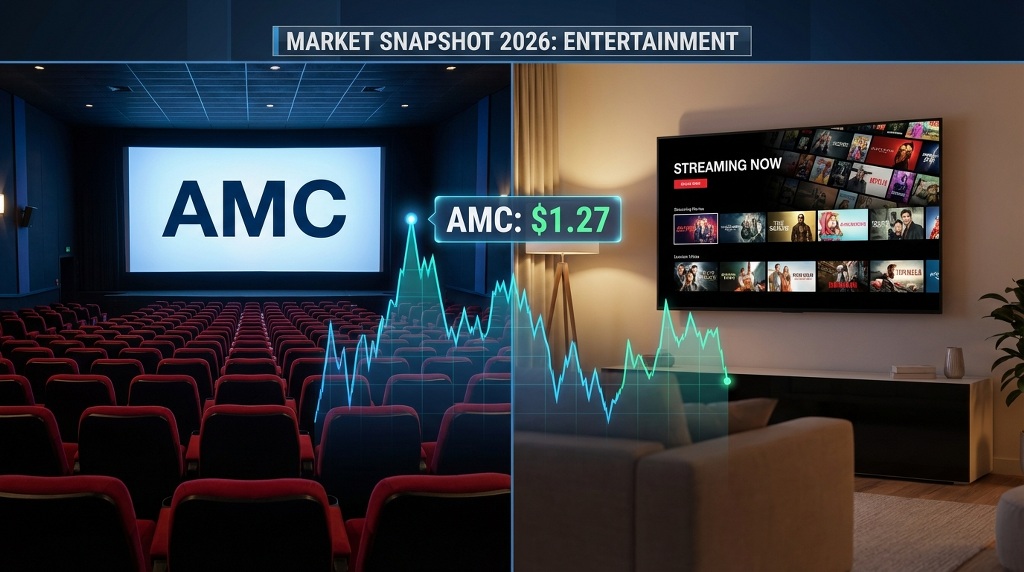
Table of Contents
Current State of AMC Stock in 2026
As of February 2026, AMC stock is trading at approximately $1.27. This is significantly lower than its high prices during the “meme stock” period of 2021.
The company currently has a market capitalization of about $651 million. Despite the lower price, investors are still interested. On February 11, trading volume exceeded 21 million shares. Over the last 52 weeks, the price ranged from $1.44 to $4.08, but recent trading has kept the stock between $1.21 and $1.76.
Although the stock dropped 13.61% in the past week, some analysts have set a price target of $3.08, suggesting the price could go up.
In comparison, the streaming industry is growing fast. Netflix has surged to over 325 million subscribers, though Disney+ has settled at approximately 125 million. Together, the global streaming market size reached nearly $160 billion in 2025. Meanwhile, the Domestic box office (movie ticket sales) reached nearly $10 billion last year, contributing to a $33.5 billion Global box office total. This shows a recovery, but the numbers are still lower than before the pandemic.
Key Point: AMC is surviving in a volatile market, but it faces strong competition from the growth of streaming services.
Rise of Streaming Platforms: Market Share Growth
In 2025, streaming services captured more than 50% of all money spent on entertainment. The shift is clear: many people now prefer watching movies at home instead of going to the theater.
While theaters earned $33.5 billion globally, streaming revenue reached $160 billion. Netflix added millions of new users every quarter, reaching 325 million by early 2026. Disney+ faced some headwinds, stabilizing at roughly 125 million users, helped by popular franchises like Marvel and Star Wars.
However, theaters are not disappearing. Attendance is increasing, and hybrid models (releasing movies in theaters and online) are helping the industry. AMC is adapting by improving its theaters with better screens and seats to offer an experience that home streaming cannot match.
Comparison Table: AMC vs. Top Streamers
| Metric | AMC Entertainment | Netflix | Disney+ |
| Revenue ($B) | ~$4.8 | ~$39 | ~$11 (Streaming Only) |
| Subscribers/Users | 200M+ (Global Attendance) | 325M+ | ~125M |
| Market Cap ($B) | $0.65 | ~$520 | ~$200 |
Note: This table compares the financial scale of streaming giants against AMC. While streamers earn more, AMC offers a unique social experience.
Structural Challenges Facing AMC Stock
AMC has to deal with changes in consumer habits, debt, and new technology.
Shift in Consumer Behavior: From Theaters to Home Viewing
Surveys show that 70% of Gen Z prefer streaming movies because it is flexible and convenient. Younger viewers like on-demand access. AMC responds to this by focusing on premium formats like IMAX and Dolby Cinema. These immersive experiences give people a reason to leave their homes.
Content Windowing and Release Strategies
“Windowing” is the time between a movie’s theater release and its online release. In 2025, many studios shortened this window to 17-45 days. This allows people to watch new movies at home sooner. However, big hits like Oppenheimer showed that keeping movies in theaters longer can still be profitable. AMC relies on the excitement of opening weekends to drive ticket sales.
Financial Metrics: Debt vs. Profitability
AMC has a significant challenge with its debt, which stands at approximately $4.0 – $4.5 billion. However, the company reported positive cash flow in 2025. In contrast, Netflix spends about $17 billion annually on new content and maintains high profit margins. AMC’s strategy involves managing this debt and finding new revenue sources beyond ticket sales.
Competitive Landscape and Technology
Streaming platforms use AI and VR tools to keep users engaged. AMC competes by using its physical locations to sell food, merchandise, and premium screenings. Loyalty programs also help keep customers coming back.
Investment Implications for AMC Stock
For investors, AMC presents a mix of high risk and potential short-term reward.
Short-Term Trading vs. Long-Term Risks
Because the stock price is low and trading volume is high (up to 45 million shares daily), AMC is popular with day traders. The upcoming earnings report on February 24, 2026, could cause the price to move quickly.
Diversification Strategies
For those interested in the entertainment sector, experts suggest a balanced approach:
- Diversify: Combine AMC stock with ETFs that track streaming companies like Netflix or Roku.
- Limit Risk: Keep high-risk stocks like AMC to a small percentage (1-2%) of your portfolio.
- Alternatives: Consider other media funds or companies like IMAX that focus specifically on cinema technology.
Conclusion
AMC remains a key player in the entertainment industry, even as streaming services grow. It distinguishes itself by offering a shared, live experience that home viewing cannot replace. Investors should pay close attention to the Q1 2026 earnings report for the latest updates on the company’s financial health.
Frequently Asked Questions (FAQ)
What is the current AMC stock price?
As of February 11, 2026, AMC trades at roughly $1.27. The high trading volume shows that traders are still very active with this stock.
Can AMC survive alongside streaming platforms?
Yes. AMC focuses on premium experiences (like IMAX) and “event films” that encourage people to watch movies in a theater setting.
How do streaming platforms like Netflix affect AMC?
Streaming expands the overall movie market. While they compete for viewers, popular streaming franchises often release films in theaters first, which helps AMC sell tickets.
Is AMC a good investment in 2026?
It is a risky investment. However, the high volatility makes it interesting for short-term traders who want to capitalize on price movements.
What are the biggest challenges for AMC?
The main challenges are the audience shift to home streaming, shorter times before movies go online, and the company’s large debt load.
Disclaimer: This article is for informational purposes only and does not constitute financial advice. Please conduct your own research (DYOR) and assess your risk tolerance before trading. MEXC does not accept liability for any investment decisions made based on the information provided herein.
Join MEXC and Get up to $10,000 Bonus!
Sign Up


