


Ethereum, the world’s largest smart-contract blockchain, has once again captured the crypto market’s attention. Following its latest network upgrade,a key milestone in Ethereum’s post-Merge roadmap that included multiple Ethereum Improvement Proposals (EIPs) focused on execution efficiency and data handling ,the network has recorded a noticeable surge in on-chain activity, transaction throughput, and developer engagement. Supporters see this as evidence that Ethereum’s long-term scaling strategy is delivering tangible results, while critics , including analysts at JPMorgan — argue that the boost may prove cyclical rather than structurally transformative.
To understand why this upgrade matters, and why opinions remain divided, it is essential to examine what the upgrade actually is, why it was necessary, how it works beneath the surface, how it benefits ETH holders, and why major financial institutions remain cautious despite the apparent momentum.
1.What Is the Ethereum Upgrade?
The recent Ethereum upgrade represents another incremental but deliberate step in the network’s carefully planned technical roadmap. Rather than introducing a single headline-grabbing change, the upgrade bundled together several coordinated protocol improvements , including refinements related to data availability and execution-layer efficiency , designed to support Ethereum’s rollup-centric scaling vision.
A central component of the upgrade involved improving how transaction data is stored, processed, and verified, particularly the data used by Layer-2 scaling solutions such as optimistic and zero-knowledge rollups. By making data posting more efficient and predictable, Ethereum can support significantly higher economic activity without proportionally increasing congestion on the base layer.
Crucially, the upgrade was deployed through Ethereum’s mature governance and testing pipeline, involving public testnets, audits, and client coordination. This reinforces confidence not only in the changes themselves, but in Ethereum’s ability to continue evolving without compromising security, decentralization, or uptime.

2.Why Ethereum Needed Another Upgrade
Ethereum was never intended to function merely as a digital currency. From the outset, it was designed to serve as a programmable global settlement layer for decentralized applications, decentralized finance (DeFi), NFTs, stablecoins, and increasingly — tokenized real-world assets and institutional financial products.
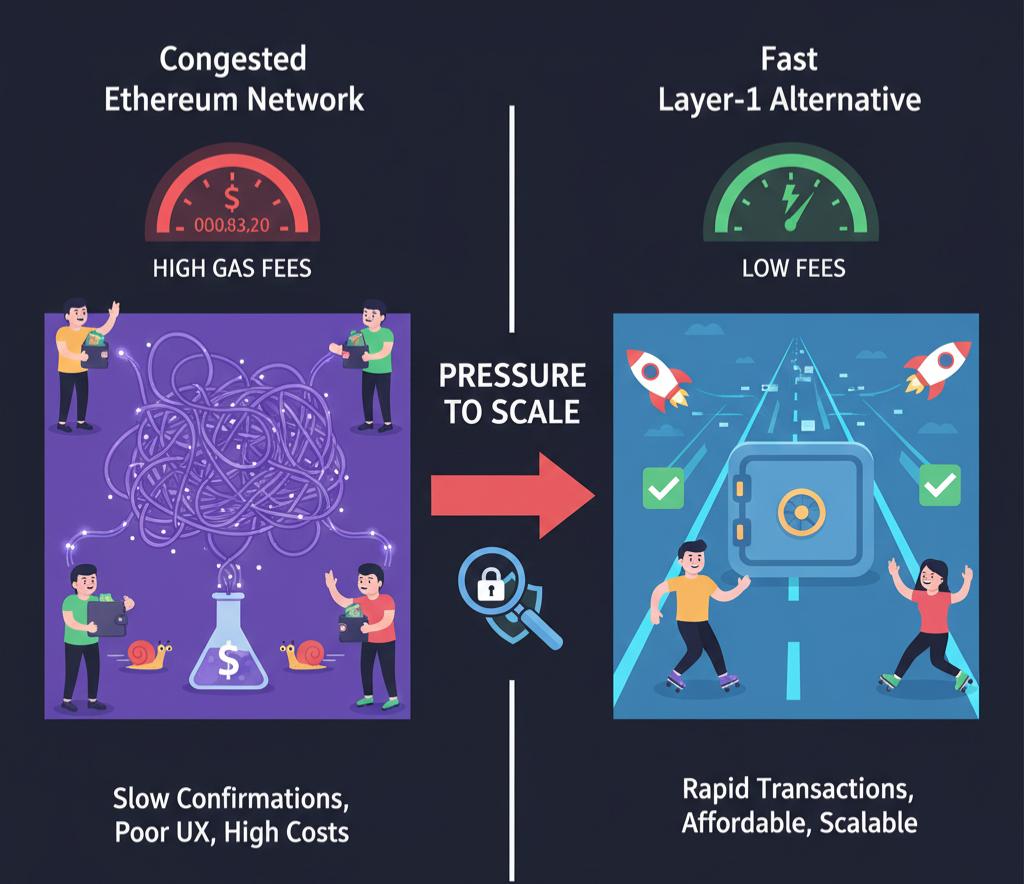
However, Ethereum’s success exposed structural limitations.
As usage expanded, the network faced:
- Persistently high and volatile gas fees during peak demand
- Network congestion that slowed confirmations and degraded user experience
- Intensifying competition from alternative Layer-1 blockchains advertising faster speeds and lower costs
- Growing pressure to scale without undermining decentralization or security
Rather than pursuing aggressive shortcuts, Ethereum’s core developers opted for a research-driven, phased scaling approach. This strategy emphasizes long-term resilience and composability, even if it sacrifices short-term optics. The latest upgrade fits squarely within this philosophy — foundational rather than flashy, incremental rather than disruptive, and designed to compound over time.
3.What Actually Changed Under the Hood
While the upgrade may appear subtle to casual users, its technical implications are meaningful.
3.1 Improved Network Efficiency
Execution-layer optimizations allow Ethereum to process transactions more smoothly during periods of elevated demand. Early post-upgrade data showed short-term increases in successful transaction throughput and reduced congestion during peak usage windows, helping to limit sudden fee spikes.
3.2 Stronger Support for Layer-2 Scaling
Ethereum’s primary scaling roadmap now explicitly centers on rollups. The upgrade improved how Layer-2s publish and verify data on Ethereum, lowering their per-transaction costs and increasing effective throughput. In the days following the upgrade, several major Layer-2 networks recorded measurable increases in transaction volume and smart-contract interactions.
3.3 More Predictable Gas Fees
While Ethereum has not eliminated gas fees, the upgrade contributed to smoother fee dynamics. Reduced volatility makes transaction costs more predictable — a critical requirement for both consumer-facing applications and institutional use cases.
3.4 Laying Groundwork for Future Scaling Phases
Several changes are largely invisible to end users but strategically important. By simplifying protocol complexity and improving data handling, the upgrade reduces friction for future phases of Ethereum’s roadmap, including deeper rollup integration and further data availability enhancements.
4.Why Network Activity Spiked After the Upgrade
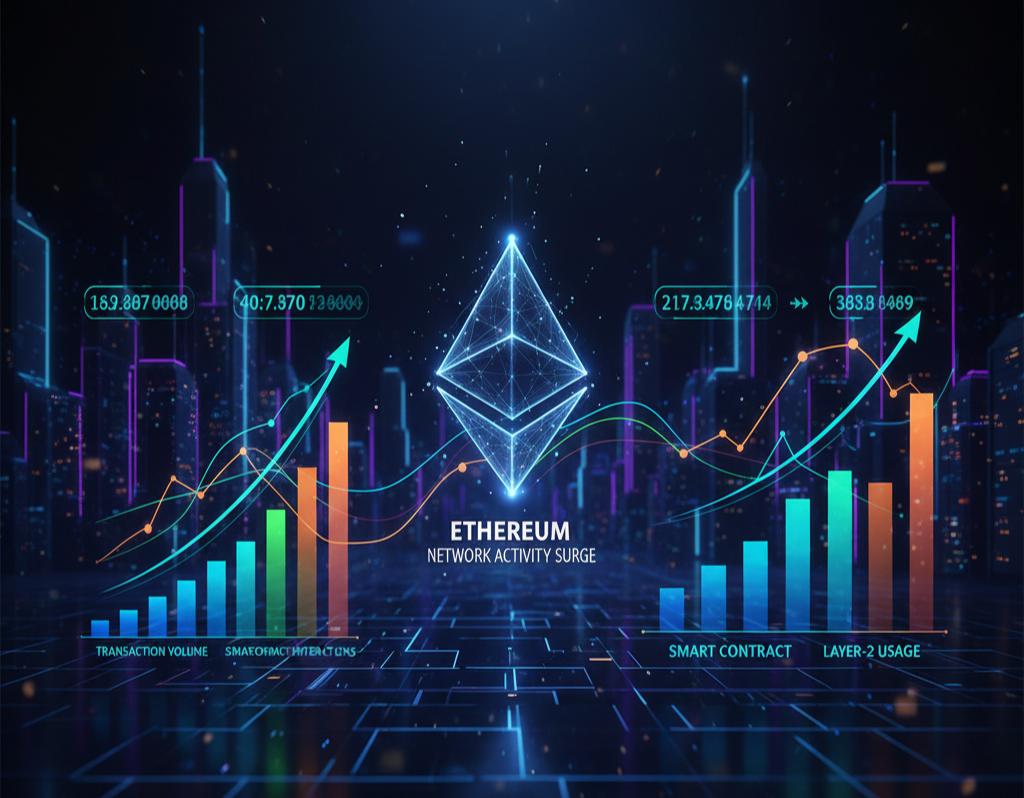
In the immediate aftermath of the upgrade, Ethereum experienced a noticeable increase in:
- Transaction volume on both the base layer and Layer-2 networks
- Smart-contract deployments and interactions
- Rollup usage and settlement activity
- Developer experimentation and application launches
Historically, developers often time releases around major upgrades to benefit from improved performance and stability. Traders and users also return to test new network conditions, particularly when fee predictability improves. Additionally, renewed confidence itself acts as a catalyst, drawing liquidity and attention back to the ecosystem.
Importantly, this responsiveness highlights one of Ethereum’s core strengths: a deeply entrenched developer and user base that actively re-engages when meaningful technical progress is delivered.
5.How the Upgrade Benefits ETH Holders
For ETH holders, network upgrades are not abstract engineering exercises ,they directly influence Ethereum’s economic model.
5.1 Increased Network Usage Reinforces ETH Demand
Every transaction, rollup settlement, and smart-contract interaction ultimately relies on ETH for gas or collateral.
Higher sustained activity translates into:
5.2 Greater ETH usage for fees
More ETH locked in staking, DeFi protocols, and applications.
Increased economic relevance of ETH within the broader digital asset ecosystem
5.3 Improved User Experience Supports Retention
Reducing friction discourages users and developers from migrating to competing blockchains. In a market defined by choice, retaining existing users is as important as attracting new ones.
5.4 Reinforcing Ethereum as the Base Settlement Layer
As institutions explore stablecoins, tokenized securities, and blockchain-based settlement, Ethereum’s neutrality, security track record, and composability remain powerful advantages. Each successful upgrade strengthens its positioning as the foundational settlement layer for on-chain finance.
5.5 Long-Term Supply Dynamics
Ethereum’s fee-burning mechanism means that periods of elevated activity can reduce net issuance. While deflation is not guaranteed, sustained usage increases the probability that ETH supply growth tightens during high-demand cycles.
6.JPMorgan’s Skepticism: Why Wall Street Remains Cautious
Despite these positives, analysts at JPMorgan have urged caution, arguing that post-upgrade activity spikes do not automatically translate into durable growth.

6.1 Activity Surges Have Historically Normalized
Ethereum has experienced similar bursts of activity following past upgrades. JPMorgan notes that metrics often revert toward baseline levels once initial enthusiasm fades.
6.2 Layer-2s May Capture Disproportionate Value
While rollups strengthen the ecosystem, JPMorgan warns that economic value may increasingly accrue at the Layer-2 level rather than flowing back to Ethereum’s base layer, potentially limiting direct upside for ETH holders.
6.3 Intensifying Competitive Pressure
Alternative blockchains continue to compete aggressively on cost and speed. JPMorgan questions whether incremental efficiency gains are sufficient to decisively outpace rivals in the long run.
6.4 Institutional Adoption Remains Measured
Although institutions are actively experimenting with blockchain infrastructure, JPMorgan emphasizes that pilots and proofs of concept do not yet constitute large-scale deployment. Regulatory clarity, operational risk, and scalability assurances remain gating factors.
7.Progress Versus Sustainability
Both perspectives carry weight.
Ethereum’s latest upgrade demonstrates credible technical progress, sustained developer engagement, and an ecosystem capable of rapidly reigniting activity. At the same time, JPMorgan’s skepticism highlights a critical distinction between momentum and permanence.
Ethereum’s long-term trajectory will hinge on:
- Whether elevated activity persists beyond the post-upgrade window
- Whether Layer-2 growth reinforces Ethereum’s base-layer economics
- Whether institutional experimentation matures into meaningful adoption
8.Conclusion
Ethereum’s recent upgrade represents another deliberate step toward its ambition of becoming a scalable, global settlement layer. The immediate rise in activity reflects renewed confidence and continued relevance within the digital asset ecosystem.
For ETH holders, the upgrade strengthens long-term fundamentals by improving efficiency, enhancing user experience, and reinforcing Ethereum’s central role in decentralized finance and tokenized assets.
At the same time, JPMorgan’s caution provides an essential counterbalance. The real test lies not in short-term metrics, but in Ethereum’s ability to translate technical progress into durable, system-wide economic value.
It is within this ongoing tension between optimism and restraint that the true story of Ethereum’s evolution continues to unfold.
Disclaimer: This content is for educational and reference purposes only and does not constitute any investment advice. Digital asset investments carry high risk. Please evaluate carefully and assume full responsibility for your own decisions.
