Overview: Tokenization Meets Mobile Hardware
In 2025 the blockchain industry saw a growing trend: smartphone ecosystems built around native tokens and community governance. These initiatives aim to combine hardware design, decentralized applications and on-chain economic incentives to create a unified, Web3-first mobile experience.
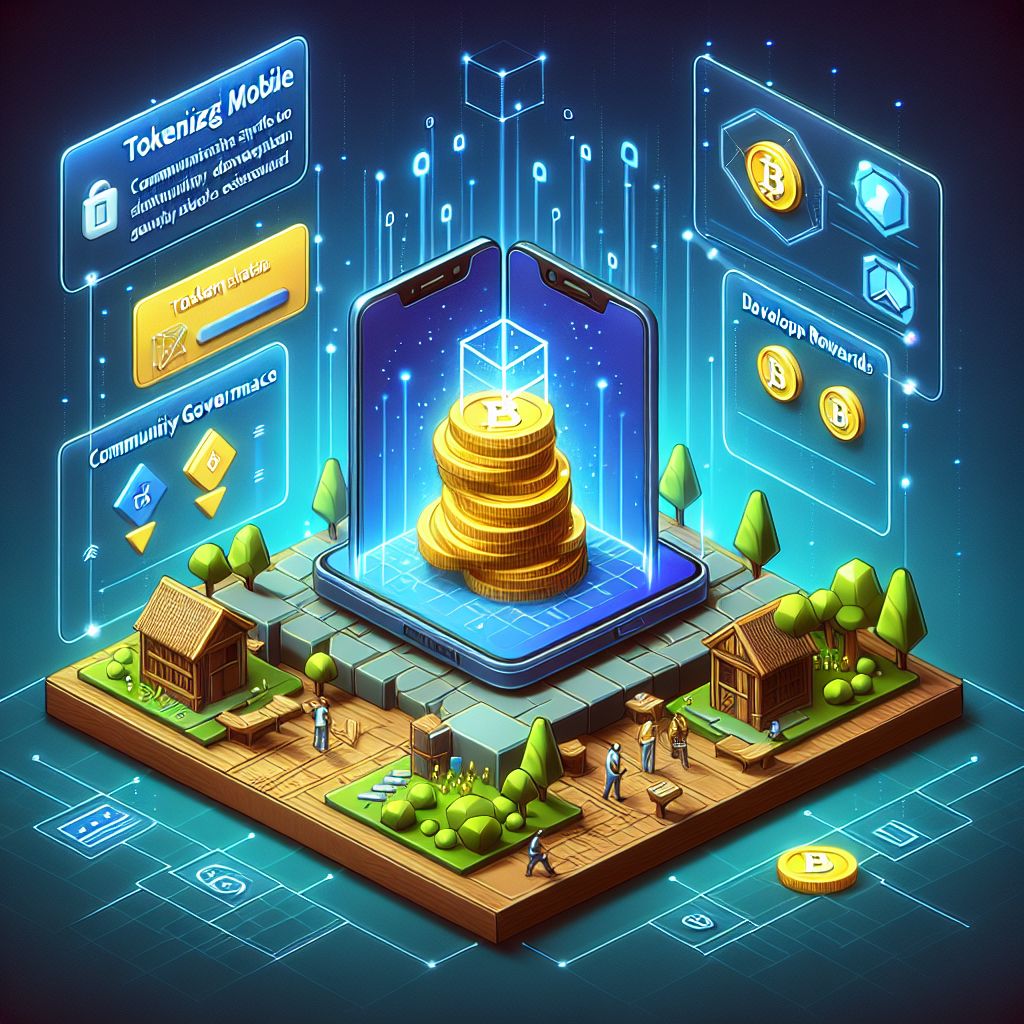
Rather than treating the device as a standalone product, this approach positions the phone as a platform whose long-term value is co-created by users, developers and hardware partners. A dedicated token acts as the economic layer, powering governance, rewards, app curation and developer compensation.
Key Tokenomics Elements
Projects pursuing tokenized smartphone ecosystems tend to share several common tokenomic design choices. Understanding these can help market participants evaluate potential value and risks.
- Capped supply: A finite maximum issuance (for example, 10 billion units) is often used to provide scarcity and predictable inflation dynamics.
- Large early-user airdrops: A significant portion of the supply is commonly reserved for early device owners and active dApp users to seed community ownership from day one.
- Growth and partnership reserves: Allocations for ecosystem development, partnerships and grants support long-term expansion.
- Liquidity and treasury allocations: Parties typically set aside tokens for market liquidity, governance treasuries and company allocations to ensure funding for maintenance and development.
- Staking and delegation mechanisms: Tokens often enable staking for functions such as app curation, security guarantees and governance voting.
Distribution Design and Community Ownership
Distribution is a central design decision. Allocating roughly one-third of supply to early users and active dApp participants has become a popular way to bootstrap a broad base of token holders. This model aims to avoid highly concentrated ownership and align incentives between the platform and the community that uses and builds on it.
Reserving the remainder for growth initiatives, liquidity, a governance treasury and team allocations provides the funding runway to support developer grants, marketing, audits and other operational needs without immediately diluting community stakes.
How Tokens Power Mobile Governance and Rewards
Tokens in these ecosystems are more than speculative assets. They act as utility units that enable coordination, curation and compensation.
- Governance participation: Token holders can vote on platform rules, security parameters and treasury spend.
- Delegation to caretakers: Holders may delegate tokens to trusted representatives (often called “guardians” or similar) who help manage standards and respond to security incidents.
- Developer incentives: Builders receive token rewards for delivering apps, features and integrations that improve the ecosystem.
- App curation and staking: Staking tokens can serve as a signal of trust for apps listed in native dApp stores. Higher staked amounts can boost discoverability and help deter low-quality or malicious apps.
Economic Signals and Quality Control
Using token staking as an economic signal allows the platform to weight curation by demonstrated commitment. This helps users discover higher-quality apps while creating an on-chain mechanism for punishing or delisting bad actors.
Device-Level Features Supporting Web3 Use
Second-generation blockchain-native smartphones released in 2025 brought several hardware and software improvements that make tokenized ecosystems more feasible.
- Secure key storage: On-device secure vaults or seed stores provide a safer user experience for private keys and signing operations.
- Native dApp stores: Integrated app stores built for decentralized applications simplify discovery and installation.
- Deep network integration: Native integrations with blockchain networks improve transaction speed and connectivity for mobile-first users.
- Hardware-level UX design: Features like secure enclaves and biometric protections make on-device custody more practical for everyday users.
These enhancements help bridge the usability gap between traditional mobile experiences and the expectations of Web3 users, supporting broader adoption beyond niche communities.
Market Context: Web3 Mobile in 2025
By 2025, mobile remained the dominant platform for consumer Internet access. Web3 projects seeking mainstream traction increasingly prioritized mobile-first strategies.
Key market trends in 2025 included:
- Rising mobile wallet adoption: More users adopted mobile wallets with integrated dApp browsing, pushing developers to optimize for small screens.
- Tokenized incentive experiments: Projects experimented with on-chain rewards to drive retention and contribution among users and builders.
- Interoperability focus: Cross-chain compatibility and bridges gained attention as users expected tokens and NFTs to move freely across ecosystems.
- Regulatory scrutiny: Increased regulatory attention around token distributions and airdrops prompted projects to adopt clearer compliance and KYC/AML frameworks.
These dynamics shaped how tokenized smartphone ecosystems structured their offerings and engaged with exchanges, wallets and partner services.
Opportunities and Potential Upsides
Tokenized smartphone ecosystems offer several potential advantages if executed well:
- Aligned incentives: Token distributions to users and builders can create powerful alignment between platform success and community value accrual.
- Network effects: A thriving native dApp economy can attract more users, creating positive feedback loops between hardware sales and on-chain activity.
- New monetization models: Instead of traditional app-store fees, projects can route rewards and curation through on-chain staking and revenue-sharing models.
- Community governance: On-chain governance can decentralize decision-making and provide transparent stewardship of development resources.
Risks and Considerations
Despite the promise, there are meaningful risks stakeholders should evaluate:
- Concentration risk: Token allocations to teams and partners must be balanced to prevent governance capture.
- Liquidity and market dynamics: Large token supplies can produce selling pressure unless liquidity is carefully managed.
- Security concerns: Mobile devices present unique attack surfaces. Robust auditing of firmware, wallets and dApp store mechanics is essential.
- Regulatory uncertainty: Token airdrops, staking rewards and governance tokens may attract regulatory scrutiny depending on jurisdiction.
- User experience: Complex on-chain flows can deter mainstream users if not simplified by UX-focused design.
How Exchanges and Service Providers Fit In
Cryptocurrency exchanges and ecosystem service providers play a supporting role in the maturation of mobile token ecosystems.
- Liquidity provisioning: Exchanges can help bootstrap trading liquidity and market depth, improving price discovery for new tokens.
- Custody and compliance: Regulated custodial services and compliance tooling can enable safer on-ramps for institutional participants.
- Education and research: Market research, guides and developer outreach help raise awareness and encourage quality contributions.
- Technical integrations: Integrations with wallet providers, bridges and indexers foster interoperability and reliability.
As a marketplace and infrastructure provider, MEXC continues to monitor such developments and publish timely analysis to help users assess opportunities responsibly.
Practical Guidance for Users and Developers
Participants evaluating tokenized mobile ecosystems should consider the following checklist:
- Review the token distribution schedule and vesting timelines for team allocations.
- Check for audited smart contracts and firmware security reports.
- Assess the community governance model and delegation options.
- Examine liquidity commitments and market-making plans.
- Understand cross-chain compatibility and wallet support for token and asset movements.
- Follow regulatory updates relevant to your jurisdiction, especially around airdrops and staking rewards.
Looking Ahead: Will Tokenized Smartphones Scale?
By 2025, tokenized smartphone ecosystems had moved beyond conceptual experiments into live deployments. The next phase will test whether these platforms can scale beyond early adopters to mainstream audiences.
Success hinges on several factors: compelling user experiences that make private key management seamless, attractive incentives that reward meaningful contribution, robust security practices, and clear regulatory positioning. If projects can balance these elements, tokenized mobile platforms may become a durable model for decentralized hardware-software ecosystems.
Final thoughts
Tokenization of mobile ecosystems represents a notable evolution in how hardware, software and communities interact. When thoughtfully designed, tokens can align incentives across users, developers and partners to build resilient, community-led platforms. As always, participants should perform due diligence and consider both opportunities and risks when engaging with this rapidly developing segment of the crypto landscape.
MEXC will continue to follow these developments and provide timely updates and educational material to help users navigate the evolving Web3 mobile frontier.
Disclaimer: This post is a compilation of publicly available information.
MEXC does not verify or guarantee the accuracy of third-party content.
Readers should conduct their own research before making any investment or participation decisions.
Join MEXC and Get up to $10,000 Bonus!
Sign Up