Fasttoken posts sharp rebound amid broader market weakness
Fasttoken (FTN), the native token of the Fastex ecosystem, posted a dramatic intraday gain in mid-December 2025, bucking a broadly cautious crypto market. The token rose from roughly $0.37 to above $1.30 within 24 hours, producing one of the largest short‑term percentage moves among altcoins that week.
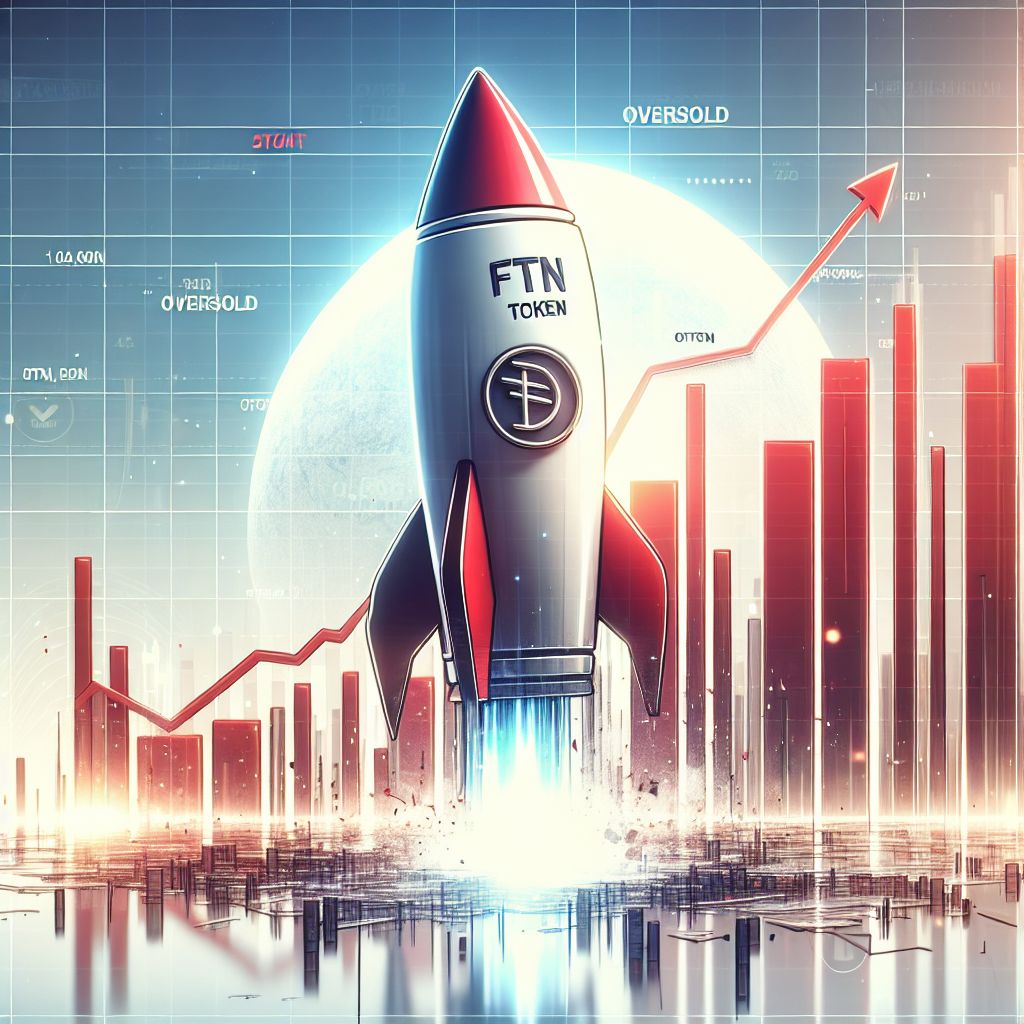
The spike occurred in the absence of a clear, single fundamental catalyst. Market observers pointed to an interplay of technical factors, liquidity dynamics and the easing of exchange risk signals that together produced a strong short‑term bounce for a token that had been under intense selling pressure earlier in the year.
What is Fasttoken and the Bahamut chain?
Fasttoken (FTN) is the utility and governance token within the Fastex ecosystem. The ecosystem includes Bahamut, an EVM‑compatible Layer‑1 blockchain built to support payments, decentralized finance, NFTs, gaming and other Web3 applications.
- Consensus and use cases: Bahamut operates with a hybrid Proof‑of‑Stake and activity‑driven consensus model. FTN is used for transaction fees, staking, payments across Fastex services, exchange listings inside the ecosystem and native dApp interactions.
- Parent company ecosystem: The project’s corporate backers operate across payments, gaming and IT infrastructure, positioning FTN as more than a single‑product utility token.
- Adoption signals: Over 2025, the protocol’s roadmap discussions have emphasized payments rails, gaming integrations and NFT use cases, although progress and user‑growth metrics remain uneven.
Why did FTN rally on December 18, 2025?
There was no official protocol update, partnership announcement or product launch coinciding with the price move, which suggests the rally was primarily market‑driven. Several factors likely combined to spark the rebound:
1. Deeply oversold technical conditions
FTN endured a severe drawdown earlier in 2025, losing a large portion of its market value. Extended sell pressure pushed the token into oversold territory, creating an environment where technical buyers and short‑term traders looked for potential mean reversion plays.
2. Exchange risk signals and subsequent relief
During 2025, FTN attracted heightened exchange monitoring and risk warnings on some venues. By mid‑December, the absence of immediate delisting actions removed a key overhang, allowing sidelined buyers to re‑enter positions on the expectation that the token’s trading availability would remain intact.
3. Concentrated liquidity amplifying moves
FTN’s liquidity is concentrated on a limited number of trading venues. When order books are thin, modest buying pressure can trigger outsized price moves, as market depth is insufficient to absorb increased demand without moving the price materially.
4. Narrative tailwinds
Renewed attention to the Fastex narrative — including Bahamut’s development, payments integrations and gaming-focused use cases — provided additional sentiment support. While none of these elements were new, they offered a framing that buyers used to justify a short‑term recovery trade.
2025 market context: why altcoins remained vulnerable
The FTN rebound took place against a backdrop of persistent altcoin weakness throughout 2025. Several macro and micro drivers framed market behavior across the year:
- Risk‑off investor sentiment: Many traders favored larger, more liquid assets as regulatory and macroeconomic uncertainty persisted, reducing risk appetite for smaller protocols.
- Continued token unlocks: Numerous projects scheduled token unlocks in 2025, increasing circulating supply and placing downward pressure on token prices unless demand scaled proportionally.
- Liquidity fragmentation: With trading volume concentrated on select venues and decentralized liquidity stretched thin for many smaller tokens, price moves could be particularly volatile.
- Focus on fundamentals: Institutional and retail flows increasingly prioritized proven on‑chain activity, active user growth and revenue generation, pressuring tokens with limited usage metrics.
These conditions meant that rallies — even large, rapid ones — often reflected short‑term repositioning rather than durable sentiment shifts toward altcoins more broadly.
Volatility and risk factors investors should note
Market participants and prospective FTN holders should be mindful of several risks that could affect the sustainability of the rally:
- Future token unlocks: Scheduled unlocks can introduce fresh supply into the market and create selling pressure if demand does not keep pace.
- Concentrated on‑chain activity: For a lasting valuation increase, the ecosystem needs higher and sustained usage across payments, NFT trading, gaming and staking.
- Liquidity risks: Limited order book depth amplifies volatility and raises execution risk for larger trades.
- Information gaps: Periods of social‑media inactivity and scarce project updates make it harder for investors to verify progress on roadmap milestones.
- Speculative dynamics: Rapid price moves in low‑liquidity tokens are often driven by momentum and short‑term traders, which can reverse quickly once profit taking begins.
Market reaction and on‑chain signals
On‑chain metrics showed an uptick in transaction activity around the rally, but the increases were modest relative to the price move. Short‑term metrics that often accompany sustainable rallies — sustained growth in unique active wallets, rising fees paid on the network and persistent on‑chain revenue — were not yet decisively strong at the time of the rebound.
Exchange order books reflected the low‑liquidity environment, with thin asks and rapid price slippage observed on several trading pairs. External analysts noted that this structure can produce exaggerated percentage gains on relatively small net inflows.
Outlook: what would support longer‑term recovery?
For FTN to build on this bounce and deliver a longer‑lasting recovery, several developments would be important:
- Measurable adoption: Demonstrable increases in daily active users, payment volume on Fastex Pay and usage in gaming or dApp ecosystems.
- Stronger on‑chain fundamentals: Sustained growth in transaction fees, staking participation and cross‑chain activity would indicate healthier network demand.
- Transparent communications: Regular project updates, clearer timelines for roadmap deliverables and responsiveness to community questions could restore investor confidence.
- Diversified liquidity: Wider exchange listings and improved market‑making would reduce volatility and support price discovery.
Without these elements, the token remains vulnerable to renewed downside if speculative momentum fades.
What traders and investors should consider
Given the combination of a sharp intraday gain and lingering structural risks, market participants should approach FTN with disciplined risk management:
- Size positions appropriately: Limit exposure relative to your portfolio and use position sizing to manage downside risk.
- Use stop‑losses and take‑profit levels: Protect gains and control losses in a highly volatile token.
- Check on‑chain and exchange data: Monitor wallet activity, staking metrics and liquidity depth to better understand market dynamics.
- Watch token unlock schedules: Be aware of future unlock dates and planned distributions that might impact supply.
- Seek diversified exposure: Consider spreading risk across assets and sectors rather than concentrating capital in a single speculative play.
Key takeaways
Fasttoken’s December 2025 surge is a clear example of how technical factors, liquidity structure and the removal of certain market overhangs can combine to produce dramatic short‑term price moves in smaller tokens. While the rebound delivered outsized returns for some traders, the underlying fundamentals and liquidity profile leave the token exposed to rapid reversals.
For investors, the episode underscores the importance of distinguishing between short‑term price action and sustainable adoption. A durable recovery for FTN will likely require measurable growth in on‑chain usage, diversified liquidity and clearer forward guidance from the project team.
As crypto markets evolve through 2025, trends such as concentrated liquidity, ongoing token unlocks and a preference for assets with verifiable real‑world usage will continue to shape which rebounds stick and which are transient. Careful due diligence and risk controls remain essential when trading high‑volatility altcoins.
Disclaimer: This post is a compilation of publicly available information.
MEXC does not verify or guarantee the accuracy of third-party content.
Readers should conduct their own research before making any investment or participation decisions.
Join MEXC and Get up to $10,000 Bonus!
Sign Up