Overview: Mining sites become AI compute hubs
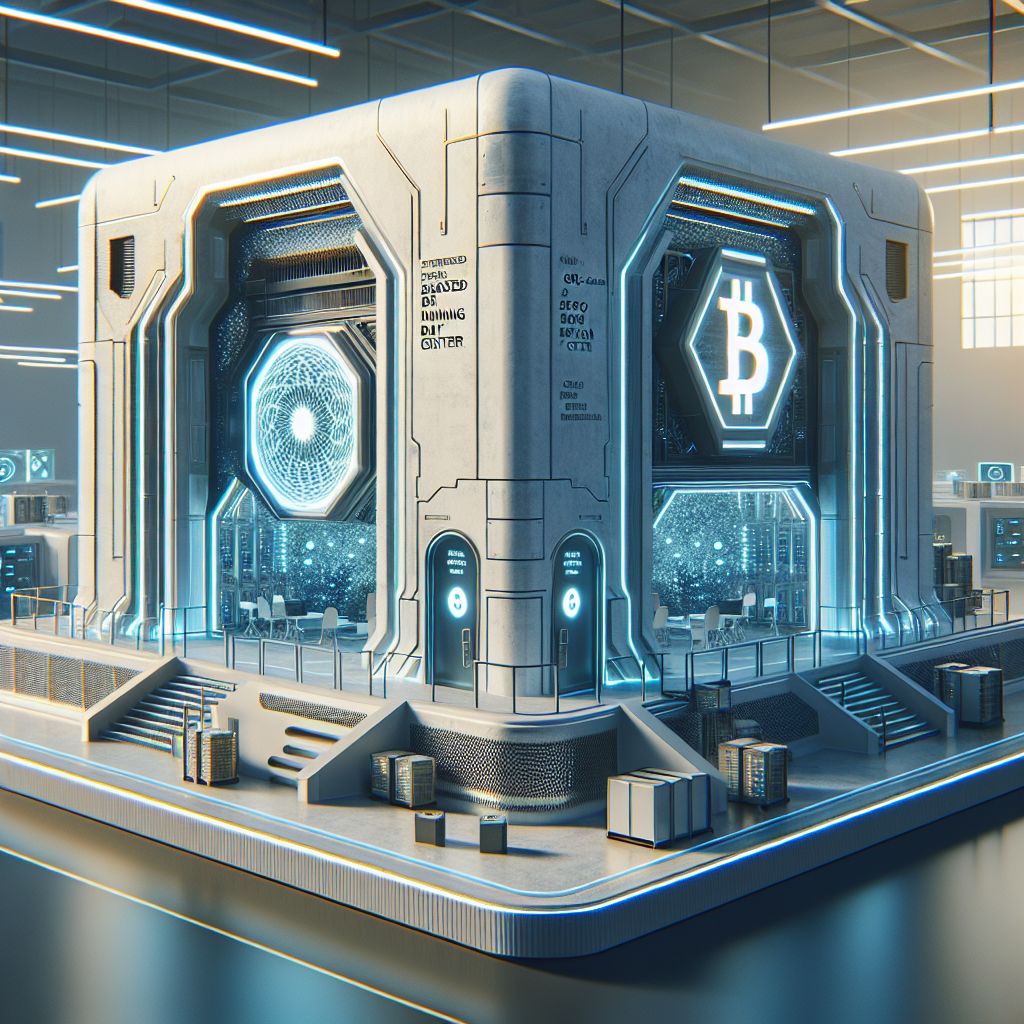
In 2025, a growing number of large-scale bitcoin mining facilities in the United States are being repurposed into data centers optimized for artificial intelligence (AI) workloads. Driven by shifts in profitability, investor preferences and the surge in demand for high-density GPU compute, operators are retrofitting warehouses and power-heavy sites to host AI accelerators rather than cryptocurrency-specific hardware.
Why operators are making the switch
Several economic and technical factors have aligned to make this transition attractive.
- Declining returns for bitcoin mining: Bitcoin mining margins tightened after years of increasing operational and power costs as ASIC efficiency gains slowed relative to electricity prices and network difficulty.
- Explosive AI compute demand: Large language models and generative AI services require dense GPU capacity. This demand has created new, high-margin revenue streams for sites that can deliver reliable, high-power infrastructure.
- Infrastructure reuse: Mining facilities were built with extensive electrical substations, cooling systems and secure shells. Those assets reduce upfront capital outlay when converting to AI colocation or managed service operations.
- Capital markets and narratives: Companies can often access more favorable financing and valuations when presenting growth prospects tied to AI compute than to commodity-driven crypto mining.
Operational advantages of existing sites
Typical large-scale mining operations already feature:
- High-capacity power hookups and on-site transformers
- Industrial cooling systems and airflow planning
- Robust physical security and remote management tooling
- Long-term land and lease agreements in lower-cost energy regions
These elements make the physical transition from application-specific integrated circuits (ASICs) to GPUs and other accelerators faster and more cost-efficient than building greenfield data centers.
Technical considerations: ASICs vs GPUs
Bitcoin mining has been dominated for years by ASICs—purpose-built chips that deliver high hashing performance per watt for a single algorithm. ASICs are highly efficient for their intended task but have limited reuse outside cryptocurrency mining.
By contrast, AI workloads rely primarily on parallel-processing GPUs and newer AI accelerators that support mixed-precision arithmetic and large memory footprints. Converting a facility thus typically means removing ASIC racks and installing GPU servers, power distribution units (PDUs), and enhanced cooling tailored to higher heat densities.
Retrofitting challenges
Operators face several practical challenges during conversion:
- Reconfiguring power distribution to support denser per-rack power draws
- Upgrading cooling and airflow to manage hot-aisle containment for GPUs
- Installing networking fabric and high-bandwidth interconnects required for model parallelism
- Securing specialized workforce and vendor relationships to operate AI clusters
Market implications in 2025
The pivot from mining to AI compute is occurring against a broader market backdrop that will shape supply, pricing and competition through 2025 and beyond.
GPU supply and prices
GPU manufacturers have struggled to balance consumer, enterprise and hyperscaler demand. The influx of GPU demand for AI colo and hosted inference is contributing to tight supply of high-end accelerators.
- High-end datacenter GPUs remain constrained, keeping prices elevated.
- Secondary markets for used GPUs are segmented: gaming-grade consumer cards differ from datacenter-class accelerators in firmware and reliability.
- New AI accelerator entrants aim to relieve concentration risk, but manufacturing ramp and ecosystem maturity take time.
Memory and component shortages
DRAM and high-bandwidth memory (HBM) supply dynamics are major determinants of GPU availability and cost. Memory shortages in 2024–25 have squeezed production of top-tier accelerators and prolonged lead times for deployments.
Cloud vs. on-prem competition
Hyperscalers continue to expand proprietary AI infrastructure, but the appetite for colocation and specialized regional capacity remains strong. Converted mining sites can compete with cloud providers by offering:
- Lower latency for local customers
- Flexible leasing models and custom rack-level service
- Opportunities for enterprises seeking on-premises control with managed support
Energy and grid impacts
Energy consumption is central to both cryptocurrency mining and AI compute. Repurposed sites raise questions about grid capacity, renewable integration, and local energy policy.
- Many former mining sites were sited near low-cost generation, including fossil fuels and curtailed renewables. Continued heavy power draws can strain local transmission if not coordinated with utilities.
- Some operators are coupling conversions with energy upgrades, including battery storage and on-site renewables, to manage demand charges and provide grid services.
- Regulatory scrutiny is increasing in some jurisdictions, with permitting and environmental considerations influencing where and how AI compute grows.
Implications for the consumer GPU and gaming markets
One recurring question is whether these facility conversions will benefit PC gamers by flooding the market with used GPUs. The reality in 2025 is nuanced.
- ASICs removed from bitcoin farms are largely unsuitable for gaming—those chips were never designed for graphics workloads.
- GPUs used in AI clusters often differ from consumer gaming cards in firmware, cooling, and reliability tuning, limiting plug-and-play resale opportunities.
- That said, shifts in large-scale procurement patterns can indirectly affect consumer supply: if hyperscalers and colocations lock in long-term orders, consumer availability may tighten in the short term.
- Conversely, as manufacturers diversify product lines and new AI accelerators enter the market, competition could gradually improve supply and pricing by the mid-to-late 2025 timeframe.
Strategic outlook for operators and investors
For mining operators, the pivot represents both a risk-management move and an effort to capture higher-margin, longer-duration contracts. Key considerations include:
- Securing long-term enterprise or cloud customers to stabilize revenue.
- Investing in cooling, networking and site-level automation to meet AI SLAs.
- Managing capital allocation between retrofits and new deployments.
- Engaging with local utilities and regulators to ensure sustainable grid integration.
What to watch in 2025
- Announcements of large colocation contracts or partnerships between converted sites and AI service providers.
- New entrants in the AI accelerator market that could ease GPU concentration risks.
- Policy developments addressing data center siting, energy use and tax treatment for compute infrastructure.
- Trends in secondary markets for used accelerators and how OEMs manage buyback or refurbishment programs.
Risks and open questions
Despite clear incentives, the transition is not guaranteed to be smooth or uniformly profitable.
- Demand volatility: AI compute demand is rapidly evolving; changes in model architectures or efficiency could alter capacity needs.
- Capital intensity: Upgrading sites requires significant capital, with payback dependent on stable lease or demand commitments.
- Skill sets and operations: Running AI clusters requires different operational expertise than managing mining farms; staffing and governance shifts are necessary.
- Energy constraints: Local grid limitations or rising energy costs could erode expected margins.
Conclusion
The repurposing of bitcoin mining warehouses into AI compute centers is a logical response to market dynamics in 2025. Existing power and cooling infrastructure gives operators a cost advantage when entering AI colocation and managed compute services. However, the transition brings technical, regulatory and market risks. For consumers, the impact on gaming GPU availability is indirect and mixed—ASIC retirements will not translate into usable gaming hardware, while tight demand for datacenter-class GPUs may keep supply constrained in the near term.
As the sector matures through 2025, stakeholders should monitor supply-chain shifts, the emergence of alternative AI accelerators, and local energy policies to understand how this structural change will shape compute markets and regional economies.
Disclaimer: This post is a compilation of publicly available information.
MEXC does not verify or guarantee the accuracy of third-party content.
Readers should conduct their own research before making any investment or participation decisions.
Join MEXC and Get up to $10,000 Bonus!
Sign Up