


Key Takeaways
- World’s Largest Gold ETF: GLD manages $137 billion in assets, making it the most popular and liquid fund for gold exposure.
- Physically Backed: Every share represents approximately 0.1 ounce of real gold stored securely in London vaults, tightly tracking the spot price.
- High Liquidity & Convenience: Investors can easily buy and sell shares through standard brokerages without the costs and security risks of storing physical gold bars.
- Portfolio Diversification: GLD serves as a practical hedge against inflation and economic uncertainty, showing strong historical performance.
GLD is a prominent exchange-traded fund (ETF) for gold exposure, currently managing $137 billion in assets. It is designed to track the price of physical gold closely, offering a practical alternative to buying physical bullion.
Table of Contents
What is GLD ETF?
The SPDR Gold Shares ETF (ticker: GLD) is a physically backed fund introduced in 2004. It allows investors to access gold prices through shares traded on the stock market. Instead of purchasing and storing physical gold bars, investors buy GLD shares on the NYSE Arca exchange.
As of February 2026, the fund has 362.9 million outstanding shares and $137.06 billion in assets under management (AUM). Created by State Street Global Advisors, the ETF tracks the LBMA PM Gold Price benchmark. Over the past year, GLD has recorded $17.12 billion in net inflows.
How GLD Tracks Gold Prices
GLD maintains its price through physical gold holdings and an arbitrage mechanism. Authorized participants can exchange physical gold for GLD shares, or vice versa. This process helps keep the share price closely aligned with the net asset value (NAV), which was recently reported at $365.37.
The fund undergoes regular audits to verify its gold reserves are securely stored. Recently, the NAV increased by 5.30% in a single month and 44.80% over the past year, directly reflecting the movement of spot gold prices.
GLD Holdings and Structure
The ETF stores its physical gold bars in secure vaults in London. It operates as a grantor trust and charges a 0.40% annual expense ratio to cover operational costs.
- Share Value: Each GLD share represents approximately 0.1 ounce of pure gold.
- Security: The trust does not lend its gold; all assets are fully allocated and insured.
- Storage: HSBC serves as the custodian, managing the physical storage to professional standards.
Performance of GLD Stock
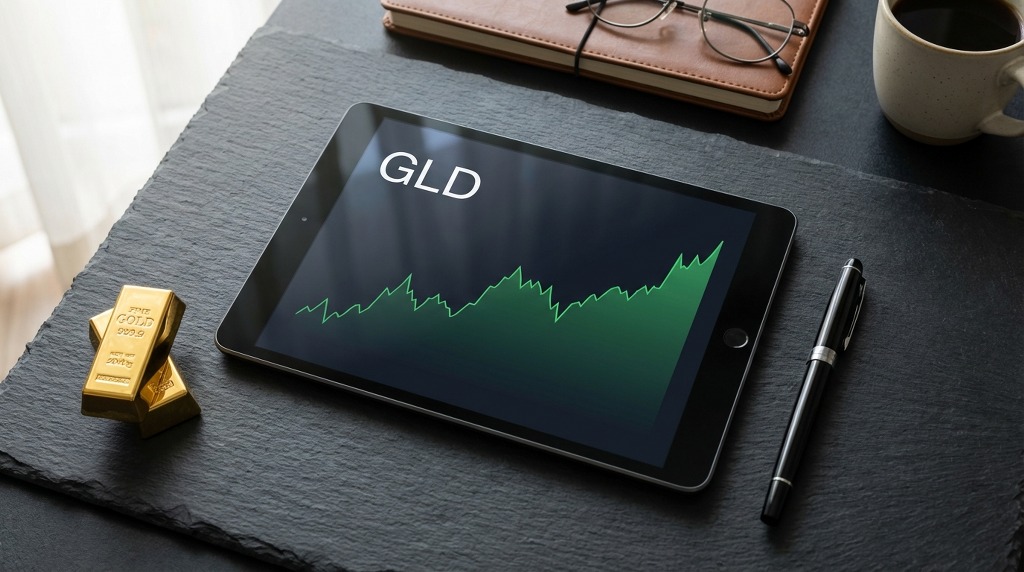
As of February 2026, GLD has shown an 18.26% year-to-date (YTD) increase, a 25.66% rise over the previous three months, and a 44.80% annual return.
In January 2026, the share price reached a high of $509.70, and it has recently traded between $463 and $468. The fund’s 52-week trading range is $261.25 to $509.70. Institutional and retail interest remains high, evidenced by significant single-day inflows, such as $1.61 billion on January 16, 2026.
Benefits of Investing in GLD ETF
GLD provides a way to invest in gold without the need for personal storage, security, or insurance.
- Liquidity: The ETF trades continuously during market hours, with an average daily volume exceeding 14 million shares.
- Cost Efficiency: High trading volume results in narrow bid-ask spreads compared to physical gold transactions.
- Diversification: Many investors use GLD to diversify their portfolios and manage risk during economic shifts.
GLD vs Other Gold Investments
GLD generally offers higher liquidity and convenience compared to physical gold or gold mining stocks.
| Feature | GLD ETF | Physical Gold | Gold Miners |
| Liquidity | High (14M+ daily volume) | Low (depends on local dealers) | High (traded on stock market) |
| Costs | 0.40% annual fee | Dealer premiums and storage costs | Company operational expenses |
| Tracking | Direct tracking of spot gold | Direct | Indirect (business operations affect price) |
| Convenience | Easy to trade via brokerage | Requires safe or vault storage | Easy to trade via brokerage |
GLD vs IAU Gold ETF Comparison
GLD and IAU are both popular gold ETFs, but they serve slightly different investor needs.
| Metric | GLD | IAU |
| AUM | $137 Billion | Smaller total scale |
| Expense Ratio | 0.40% | 0.25% |
| Liquidity | Highest volume in the gold market | Good, but lower than GLD |
| Tracking Method | Physically backed | Physically backed |
GLD is typically preferred by active traders due to its higher liquidity, while IAU is sometimes chosen for its slightly lower fee.
When to Invest in GLD ETF
Investors often consider gold ETFs during periods of rising inflation or global economic uncertainty. The $17 billion in yearly inflows and an 18%+ YTD increase in early 2026 suggest strong current market interest. Financial analysts commonly recommend allocating 5% to 10% of a broader portfolio to gold for diversification purposes.
Conclusion
GLD remains the largest gold ETF available, offering investors a straightforward and highly liquid method to include gold in their investment portfolios without the logistical challenges of physical ownership.
Frequently Asked Questions
What is GLD ETF and is it backed by real gold?
Yes, GLD is backed by physical gold bars stored in bank vaults. It tracks the spot price of gold and currently has 362.9 million shares outstanding.
How much gold does one GLD share represent?
One GLD share represents approximately 0.1 ounce of physical gold.
Does GLD pay dividends?
No, GLD does not pay dividends. Returns are based entirely on the price appreciation of the underlying gold.
Is GLD a good long-term investment?
Many investors use GLD as a long-term portfolio diversifier. Its historical performance, including a recent 44.80% annual return, reflects its utility in tracking gold prices over extended periods.
GLD vs IAU: Which gold ETF is better?
GLD is generally preferred for its higher trading volume and larger size ($137 billion AUM), which makes it easy to buy and sell quickly. IAU has a lower expense ratio, which might appeal to long-term investors less concerned with daily liquidity.
Disclaimer: This article is for informational purposes only and does not constitute financial advice. Please conduct your own research (DYOR) and assess your risk tolerance before trading. MEXC does not accept liability for any investment decisions made based on the information provided herein.
Enjoy Most Trending Tokens, Everyday Airdrops, Xtremely Low Fees and Comprehensive Liquidity!
Sign Up App Store
 Google Play
 Android APK