


As the Artificial Intelligence (AI) sector continues to mature, investors are closely monitoring market valuations. While companies like Nvidia and Tesla have shown strong performance, market analysts are debating whether the sector is becoming overvalued. For investors looking to manage risk, cryptocurrency derivatives offer an alternative to traditional stock shorting. Platforms offering “Stocks Futures,” such as MEXC, provide a mechanism for traders to hedge against potential price corrections in the equities market.
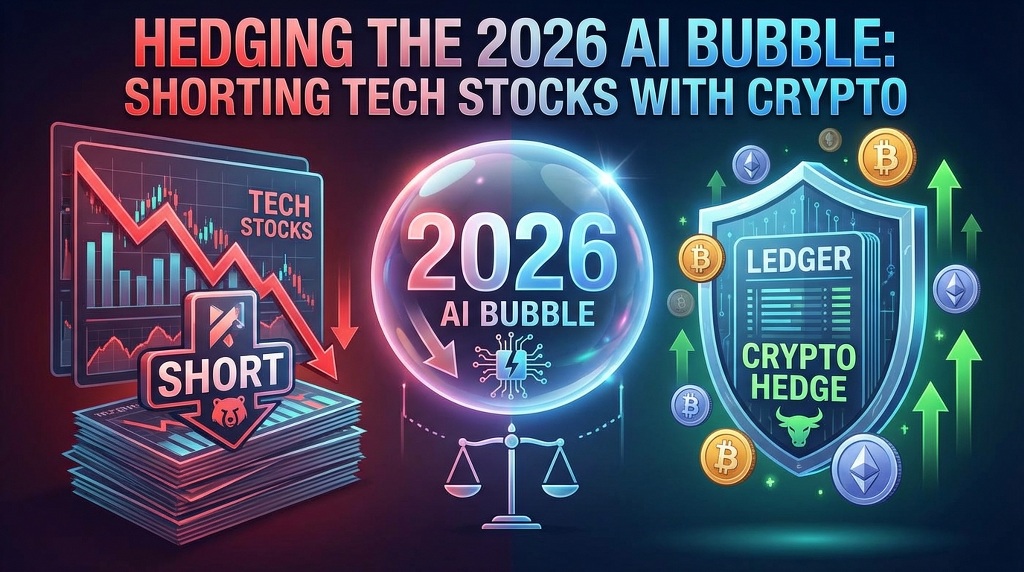
Table of Contents
Understanding the 2026 AI Bubble in Tech Stocks
Market Snapshot: As of late February 2026, the market remains volatile. Nvidia is trading around $192.85 per share (up 52% year-over-year), and Tesla is trading near $409.
Nvidia’s current valuation represents a significant 52.46% increase over the last 12 months, pushing its market cap to nearly $4.74 trillion. Tesla has also seen recovery, trading around $409, driven by optimism surrounding its robotics division. While these figures reflect growth, high valuations often raise concerns about sustainability.
- Nvidia: Currently powers about 80% of global AI training with its GPUs.
- Tesla: Climbed from under $200 in 2024 to over $400 by early 2026.
Why Hedge with Crypto Shorting Strategies Now
The Concept: Crypto-based shorting allows traders to speculate on asset prices outside of traditional stock market hours.
Unlike traditional stock exchanges with set operating times, crypto markets operate 24/7. This is particularly relevant for the tech sector, where news often breaks overnight or on weekends. By using tokenized futures, such as the TESLAUSDT pairs available on MEXC, investors can react to market movements instantly. Furthermore, these derivatives often offer flexible leverage options, which significantly exceeds the margin constraints found in traditional brokerage accounts.
Signs of the AI Bubble Bursting in 2026
Key Indicators: Analysts point to Nvidia’s Price-to-Earnings (P/E) ratio of 47.44 and heightened volatility across the broader tech sector as potential warning signs.
Surging Valuations and Equity Issuance Warnings
Data from January 2026 indicates a split in the sector. While smaller AI startups are rushing to issue new equity to raise cash, established giants like Nvidia are taking a different path, authorizing massive share buybacks (with over $62 billion remaining in their repurchase program). However, despite this bullish signal, Nvidia maintains a historically high P/E ratio. Furthermore, its dividend yield is currently a negligible 0.02% (not 2.1%), meaning investor returns are almost entirely dependent on continued stock price appreciation rather than income.
Tech Stock Volatility: Nvidia, Tesla, and AI Leaders Under Pressure
In late February 2026, the market witnessed sharp daily price swings. For instance, Nvidia fluctuated between $187 and $194 in a single trading session. Meanwhile, Tesla is currently trading below its 20-day moving average near $418, a technical signal often interpreted as a loss of upward momentum.
- Nvidia: A daily price spread of over $6 suggests uncertainty among traders.
- Tesla: Technical indicators show momentum might be slowing down.
Analyst Views on Inflating AI Hype vs. Reality
Market sentiment remains mixed. While some commentators advocate holding AI stocks through 2026, other financial analysts warn that the “bubble” could expand further before a significant correction occurs. The volatility observed in February indicates that institutional investors are adopting a more cautious approach.
Hedging Tech Stocks: Core Concepts
Definition: Hedging is a risk management strategy used to offset losses in investments. In this context, it involves shorting overvalued tech stocks (via futures) to balance potential declines in a long-term portfolio.
What Is Hedging the AI Bubble?
Hedging functions similarly to an insurance policy. If an investor owns AI stocks but fears a short-term price drop, they can open a “short” position. If the stock price falls, the profit from the short position helps neutralize the loss from the stock holdings.
Traditional Shorting Tech Stocks Risks in 2026
Shorting stocks through traditional finance (TradFi) can be complex. Traders often need to borrow the physical shares, which can be costly or unavailable if the stock is heavily shorted. Crypto derivatives circumvent this by allowing traders to speculate on price movements without needing to borrow the underlying asset.
Shorting Tech Stocks Using Crypto
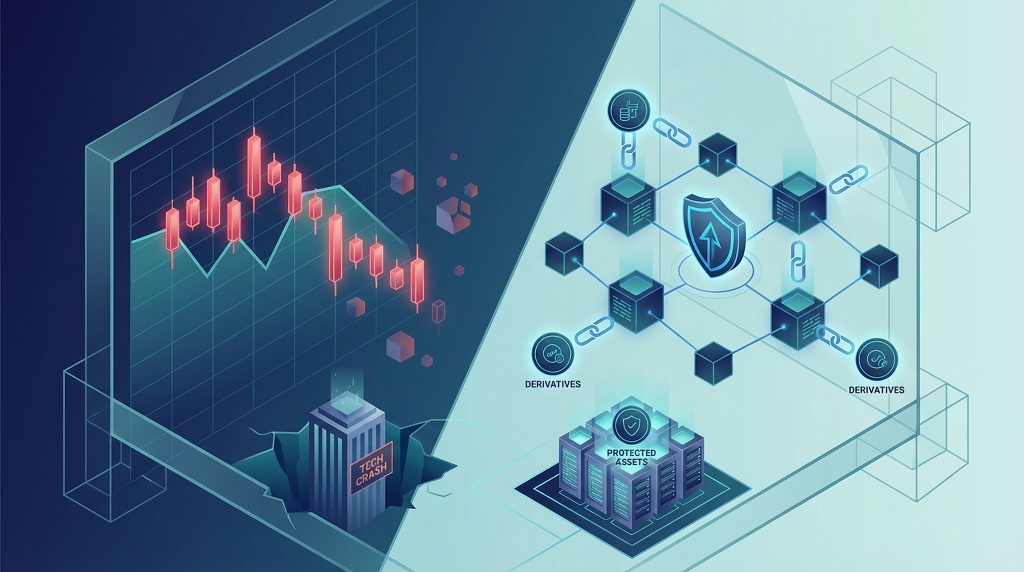
Mechanism: Traders can utilize Stocks Futures on platforms like MEXC to trade perpetual contracts (e.g., TSLAUSDT) using USDT as collateral.
Crypto Perpetual Futures for Shorting Nvidia and Tesla
“Perpetual contracts” are a type of futures contract without an expiry date. These allow traders to speculate on the price of assets like Nvidia and Tesla continuously.
Synthetic Assets and Tokenized Stock Derivatives in DeFi
While often called “synthetics,” many centralized exchange offerings are technically USDT-margined derivatives that track the price feed of the real-world asset. For example, a contract can track Tesla’s price movement to $409. This sector allows for exposure to traditional markets within the crypto ecosystem.
Step-by-Step Guide to Shorting AI Bubble Stocks
Process Overview: The general process for hedging via crypto derivatives involves depositing stablecoins and selecting the appropriate stock ticker.
Traders often select platforms based on liquidity and fees. MEXC’s Stocks Futures is frequently cited for its accessibility to major tech indices and individual stock pairs.
Setting Up Short Positions on Tech Perpetuals
- Collateral: Traders typically use USDT (Tether) as the base currency.
- Selection: In the futures interface, users search for stock pairs like NVIDIAUSDT.
- Execution: Selecting “Short” (Sell) opens a position that profits if the asset’s value decreases.
Risk Management: Stop-Losses and Leverage Control
Trading derivatives carries inherent risk. Standard risk management advice includes limiting leverage (e.g., to 5x or lower for hedging purposes) and utilizing “Stop-Loss” orders. These orders automatically close a trade if the market moves in an unfavorable direction, protecting capital.
Note: Traders must also monitor “funding rates,” which are periodic payments exchanged between buyers and sellers to keep the contract price close to the spot price.
Top Crypto Strategies for 2026 AI Bubble Hedge
Strategy: A balanced approach often involves shorting specific high-valuation stocks (like NVDA) while maintaining stablecoin reserves.
- Inverse Tokens and Perpetual Contracts Breakdown: Perpetual contracts (like NVIDIAUSDT) allow for direct profit if the asset price drops from levels like $193. Inverse tokens are another instrument; these are engineered to increase in value mathematically when the target asset declines.
- Diversifying with Stablecoins Amid Tech Selloffs: Diversification remains key. Holding a portion of a portfolio in stablecoins (like USDT) provides a hedge against volatility, acting as a “dry powder” reserve during market fluctuations.
- Real-World Examples: Hedging TSLA and NVDA Volatility: If a trader believes Tesla is overextended at $409, they might open a short position. If the price corrects to $390, the difference represents a profit, offsetting losses in their traditional stock portfolio.
Risks and Risk Mitigation
Note: Leverage acts as a multiplier for both gains and losses. Proper position sizing is essential.
- Unlimited Loss Potential in Shorting Crypto: In traditional short selling, losses can be theoretically unlimited if a stock price rises indefinitely. In crypto futures, the risk is typically limited to the margin (collateral) deposited, though liquidation results in the total loss of that collateral.
- Regulatory and Liquidation Risks in 2026 Markets: Crypto markets face evolving regulations. Additionally, if the market moves against a leveraged position, the exchange protocol may “liquidate” the trade to cover the position. Monitoring the “liquidation price” is a critical habit for futures traders.
Conclusion
While the AI sector continues to innovate, market cycles inevitably include corrections. Tools like MEXC Stocks Futures provide sophisticated investors with the means to hedge risk. By understanding the mechanics of shorting TESLAUSDT or NVIDIUSDT, traders can better navigate the uncertainties of the 2026 market.
Frequently Asked Questions
What are the options for shorting AI tech stocks in 2026?
Platforms like MEXC offer Stocks Futures, providing access to liquidity for major tech names like Nvidia and Tesla.
Is it possible to short Nvidia or Tesla using cryptocurrency?
Yes. Through derivatives known as “perpetuals” (e.g., TSLAUSDT), traders can speculate on price movements of assets like NVDA ($193) or TSLA ($409) without owning the physical share.
Is the 2026 AI bubble about to burst?
Market indicators are mixed. Nvidia’s P/E ratio is high at 47.44, but the company is actively buying back shares ($62B program). However, low dividend yields (0.02%) and high valuations are interpreted by some analysts as signs of an overheating market.
How do synthetic assets help hedge tech stock declines?
Synthetics and derivatives allow traders to track and trade stock price movements on the blockchain. This emerging sector is projected to grow significantly by 2030.
What are the main risks of shorting stocks with crypto?
The primary risk is leverage. If the asset price increases, leveraged positions can be liquidated quickly. Risk management strategies, such as capping leverage at 5x, are recommended.
Disclaimer: This article is for informational purposes only and does not constitute financial advice. Please conduct your own research (DYOR) and assess your risk tolerance before trading. MEXC does not accept liability for any investment decisions made based on the information provided herein.
Enjoy Most Trending Tokens, Everyday Airdrops, Xtremely Low Fees and Comprehensive Liquidity!
Sign Up App Store
  Google Play
  Android APK