


It is the nightmare scenario every decentralized finance (DeFi) participant dreads, and the timing could not have been more surreal. On April 1, 2026, the Solana-based decentralized exchange Drift Protocol suffered a devastating exploit. As panic rippled across the market, Drift’s official communications had to precede their emergency broadcast with a grim clarification: “This is not an April Fools joke.”
Having covered the cryptocurrency markets for a decade, I know that the sting of a major hack is something this community knows all too well. While it’s completely valid to feel frustrated, fearful, and betrayed when “trusted” protocols fail, we must ground our perspective in the cold, hard on-chain facts. Initial estimates suggested a $200 million loss, but blockchain security firms and on-chain monitors now confirm the drained funds exceed $285 million, effectively wiping out the vast majority of the platform’s liquidity.
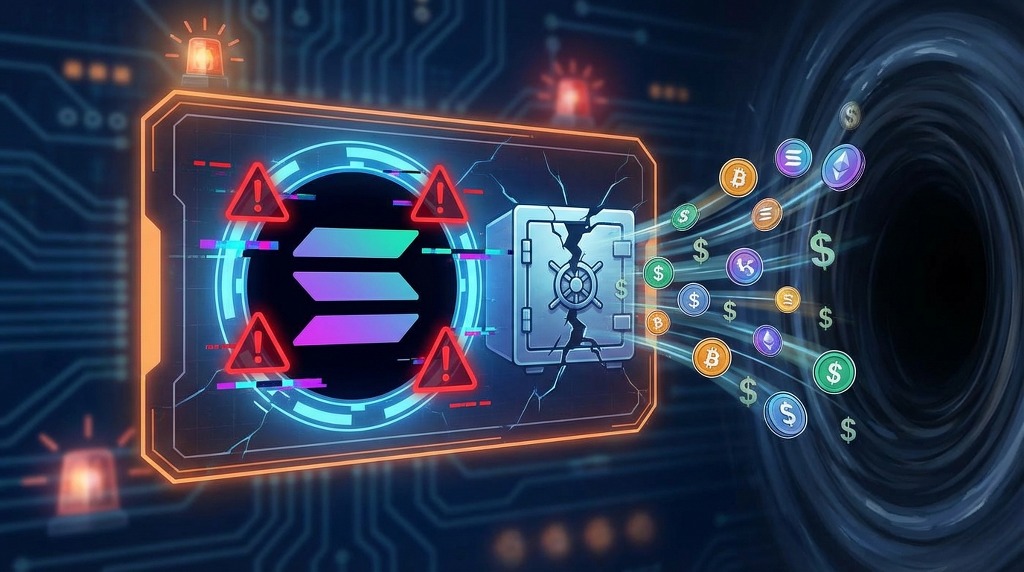
Table of Contents
By the Numbers: The Drift Protocol Exploit
For a quick overview of the ongoing situation, here is the real-time fallout of the attack:
| Metric | Details |
| Target Platform | Drift Protocol (Solana DEX) |
| Estimated Losses | $285+ Million |
| TVL Impact | Plunged from $309M to $41M in 12 minutes |
| Token Price | $DRIFT dropped 25%+ in 24 hours |
| Hacker’s Exit Route | Bridged to Ethereum (Converted to $ETH) |
The Anatomy of a Premeditated Heist
Many users mistakenly assume that DeFi hacks are opportunistic, spur-of-the-moment code glitches. The reality of the Drift exploit is far more calculated. This wasn’t a simple smart contract bug; it was a highly premeditated attack mapped out weeks in advance.
Here is a breakdown of how the attacker orchestrated the drain:
- The Phantom Token: Three weeks prior to the attack, the exploiter created a fraudulent asset on the Solana network called the CarbonVote Token ($CVT).
- Oracle Manipulation: By injecting a mere $500 of liquidity into a funding pool and wash-trading the token over several weeks, the hacker generated a fake, stable oracle price history for the token.
- The Key Compromise: On the day of the attack, the hacker bypassed platform safeguards—likely via compromised administrator keys—and listed the worthless $CVT token directly onto Drift’s spot market.
- The Drain: The attacker artificially raised withdrawal limits to an absurd $500 trillion, deposited 7.85 million $CVT as “collateral,” and systematically borrowed and drained real, blue-chip assets ($USDC, $JLP, $cbBTC, and $USDT) from the protocol’s vaults.
Drift immediately suspended all deposits and withdrawals, coordinating with security firms, cross-chain bridges, and centralized exchanges to contain the bleeding.
A Reality Check: The Ethereum Exit Route
There is a hard truth about this exploit that challenges the prevailing “Solana vs. Ethereum” narrative. While Solana has dominated the total value locked (TVL) and retail volume narratives over the last year, the attacker’s exit strategy speaks volumes about network capabilities.
After swapping the stolen assets into stablecoins via aggregators on Solana, the hacker immediately bridged the nine-figure sum to the Ethereum network to purchase $ETH. This highlights an undeniable reality in the 2026 crypto ecosystem: when an entity needs to move hundreds of millions of dollars quietly and secure exit optionality, Ethereum remains the undisputed king of deep liquidity.
Market Contagion and Next Steps
The immediate fallout has been brutal. The native $DRIFT governance token cratered over 25%, and the protocol’s TVL evaporated in a matter of minutes. Other Solana DeFi heavyweights, such as Jupiter Exchange, quickly stepped forward to assure users that they had zero exposure to Drift’s markets, effectively firewalling the panic. Institutional players and infrastructure providers have also released statements confirming they remain unaffected.
As a seasoned market observer, my advice to the community is grounded in strict caution:
- Revoke Approvals: If you have interacted with Drift, revoke your wallet smart contract approvals immediately.
- Avoid Speculation: Do not attempt to “buy the dip” on the $DRIFT token until comprehensive post-mortem reports are released.
- Demand Better Security: Protocol multisig structures and vault security models need to be thoroughly audited and restructured.
The Drift exploit is a painful reminder that in the bleeding-edge world of decentralized finance, absolute security is an illusion. Stay vigilant, stay skeptical, and prioritize self-custody.
Disclaimer: This post is a compilation of publicly available information. MEXC does not verify or guarantee the accuracy of third-party content. Readers should conduct their own research before making any investment or participation decisions.