

On the evening of January 29, 2026, Kevin Warsh unexpectedly appeared at the White House, where US President Donald Trump introduced him as the next nominee for Chair of the Federal Reserve, set to replace Jerome Powell. Kevin Warsh was once the youngest person in history to serve on the Federal Reserve Board of Governors, played a key role in preventing Morgan Stanley from collapsing in 2008, and nearly took the Fed Chair seat currently held by Jerome Powell back in 2017.

So who exactly is Kevin Warsh? What is his stance on crypto? And how could monetary policy change if he assumes the most powerful position in global finance?
Key Takeaways
- An overview of Kevin Warsh, including his career and personal background
- Any negative reaction from the crypto market to a potential Warsh appointment would mainly stem from a monetary policy expectation shock, not because he is anti-crypto
- In the short term, markets could turn risk-off, liquidity may tighten, and Bitcoin and altcoins could face pressure
- In the medium to long term, if the Fed shifts toward rate cuts aligned with Donald Trump’s pro-growth agenda, crypto could still benefit indirectly from macro policy
- Bottom line for investors: Warsh is not an immediate bullish catalyst, but he is also not the end of the next crypto cycle
1. Who Is Kevin Warsh?
At a press conference on the evening of January 29, President Trump confirmed that he would announce his nominee for Fed Chair on Friday morning US time. On the same day, CNN reported that Kevin Warsh was present at the White House, fueling speculation that he had emerged as the leading candidate for the role.

Kevin Warsh served as a Federal Reserve Governor from 2006 to 2011 under President George W. Bush. Appointed at the age of 35, he became the youngest individual in history to sit on the Federal Reserve Board of Governors.
Before joining the Fed, Warsh worked at investment bank Morgan Stanley in the Mergers and Acquisitions division. He later became Special Assistant for Economic Policy to President Bush and Executive Secretary of the National Economic Council. Currently, he is a scholar at the Hoover Institution at Stanford University and an adviser at Duquesne Family Office, the investment firm of billionaire Stanley Druckenmiller.
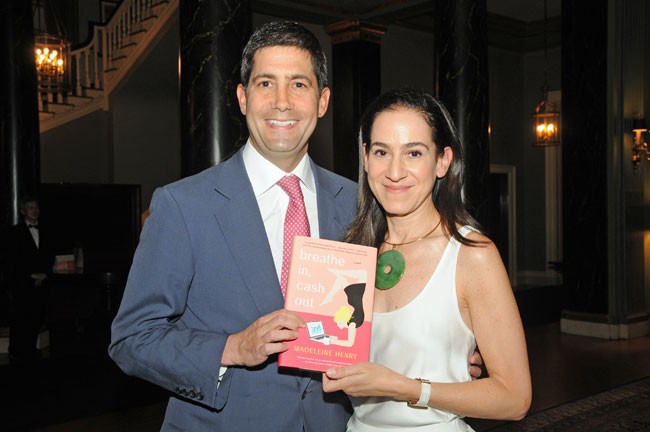
One notable personal detail is that Warsh is married to Jane Lauder, the granddaughter of Estée Lauder’s founder. His father-in-law, billionaire Ronald Lauder, is a longtime friend of Donald Trump and a major donor to the Republican Party. This relationship is widely seen as one factor that helped Warsh gain access to the inner circles of power.
2. How Could Fed Monetary Policy Change Under Warsh?
Warsh holds views on economic management that differ meaningfully from those of Jerome Powell.
2.1 Is Warsh a Hawk or a Dove?
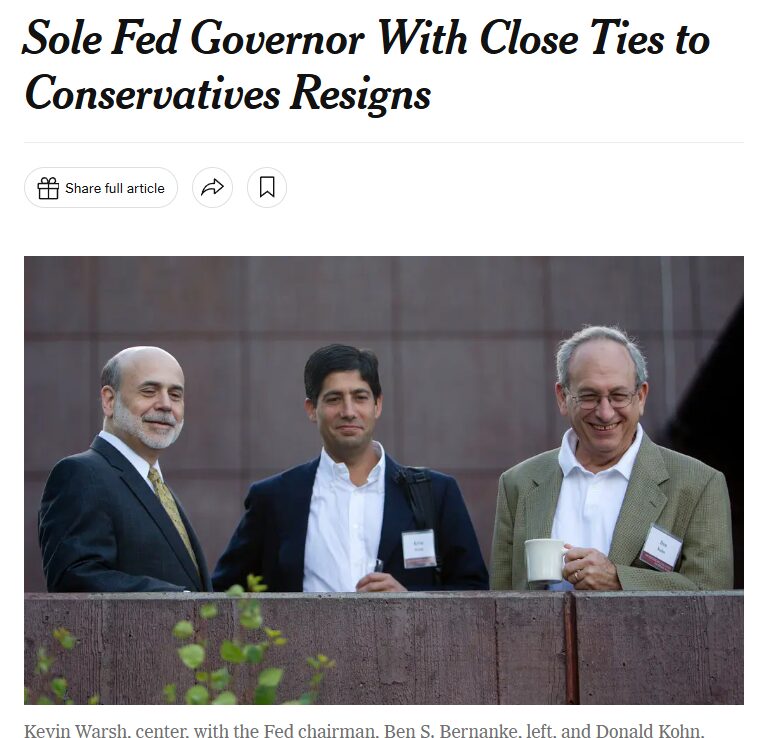
This is the question that has left many investors uncertain. Historically, Warsh was known as a hawk, prioritizing inflation control over growth stimulus. In 2011, he resigned from the Fed due to disagreements with then Chair Ben Bernanke over the quantitative easing program.
However, in recent months, Warsh has expressed support for cutting interest rates. Trump himself confirmed that “he thinks rates should be lowered.” This shift has raised questions about whether Warsh has genuinely changed his views or is adjusting his stance to align with Trump’s preferences.
2.2 “Inflation Is a Choice”
Warsh’s most famous statement is “Inflation is a choice.” By this, he argues that inflation is not a natural outcome but the result of misguided decisions by the Fed.

Warsh believes the Fed misunderstands the root cause of inflation. The traditional view holds that inflation arises when the economy overheats and wages rise. Warsh disagrees, arguing that the real culprit is the Fed’s seven trillion dollar balance sheet, which has injected excessive liquidity into the system.
Based on this view, Warsh proposes what many see as a paradoxical formula: cut interest rates while simultaneously shrinking the balance sheet. His logic is that by pulling excess money out of the system, inflation will naturally cool. Once inflation pressures ease, the Fed could lower rates without triggering another price surge.

Many economists remain skeptical. They argue that withdrawing liquidity too quickly could tighten financial conditions and slow economic growth. The idea of shrinking the balance sheet while cutting rates is often criticized as unrealistic and lacking empirical support.
2.3 Warsh Wants the Fed to Coordinate With the Treasury
Another controversial proposal from Warsh is his call for a new Fed-Treasury Accord, similar to the agreement reached in 1951 after World War II. He argues that the Fed and the US Treasury should coordinate more closely to manage national debt effectively, rather than operating as fully separate entities.
This view aligns with Trump’s long-held position that the Fed Chair should consult with the President on interest rate decisions. For Warsh, Fed independence does not mean isolation from the executive branch.
3. Kevin Warsh’s Stance on the Crypto Market
The key question for crypto investors is how Warsh views digital assets and whether he could help revive the market compared to Jerome Powell.
3.1 Market Impact Through Investor Sentiment
Immediately following rumors of Warsh’s nomination, Bitcoin and other risk assets sold off as investors worried about tighter monetary policy or reduced liquidity:
- Bitcoin fell below key levels due to expectations that a Warsh-led Fed would be more cautious about quantitative easing
- The US dollar strengthened, putting additional pressure on risk assets
3.2 Potential Upside If He Turns More Dovish
Some analysts argue that if Warsh truly supports rate cuts more aggressively than Powell, risk assets like crypto could benefit as capital flows back into higher-risk markets. However, this remains highly uncertain.
Historically, Warsh’s stance on crypto has been nuanced. On one hand, he has invested in crypto startups, including the now-defunct algorithmic stablecoin project Basis and Bitwise, a crypto index fund manager. He has also stated that Bitcoin could serve as a “durable store of value, similar to gold.”
Even if Warsh ultimately assumes the Fed Chair role and Bitcoin drops sharply in the short term, the main driver would not be hostility toward crypto, but rather a shock to monetary policy expectations. Crypto markets are highly sensitive to liquidity and interest rates. Warsh is viewed as more disciplined on monetary policy than Jerome Powell, so speculative capital could retreat initially, pushing Bitcoin and altcoins lower. This would be a sentiment-driven reaction, not a long-term rejection of crypto.
At the same time, there is room for optimism. President Donald Trump needs a Fed Chair willing to pursue more accommodative policies than those under Jerome Powell in order to stimulate economic growth, support financial markets, and ease borrowing costs amid rising public debt.
Investors should also pay attention to two key milestones regardless of who becomes Fed Chair. In May 2026, Jerome Powell’s term officially ends and the new Chair takes office, marking the point when policy changes can truly begin. The second half of 2026 is the period many investors are watching closely. If the new Chair begins implementing easing measures, liquidity could return more forcefully to markets.
4. Conclusion
Overall, Kevin Warsh is not a “pro-crypto” Fed Chair in the direct sense, but he is also not hostile to Bitcoin or dismissive of its long-term role. If Warsh takes office, the crypto market is likely to face short-term pressure due to policy expectation shocks and a risk-off environment. However, with Donald Trump prioritizing growth and needing a Federal Reserve inclined toward lower rates, crypto still has room to benefit indirectly from future liquidity cycles.
For investors, Warsh is not an immediate bullish signal, but rather a macro variable that deserves close attention over the medium to long term.
Disclaimer: This content does not constitute investment, tax, legal, financial, or accounting advice. MEXC provides this information for educational purposes only. Always do your own research, understand the risks, and invest responsibly.
