

Diplomatic momentum and the market backdrop
In late 2025, diplomatic efforts around a potential Russia–Ukraine ceasefire advanced notably, with senior officials from Ukraine, the United States, and European partners narrowing differences on a framework that includes security guarantees and verification mechanisms. While some territorial and political issues remain unresolved, reports of alignment on large elements of a settlement prompted market participants to re-evaluate geopolitical risk premia.
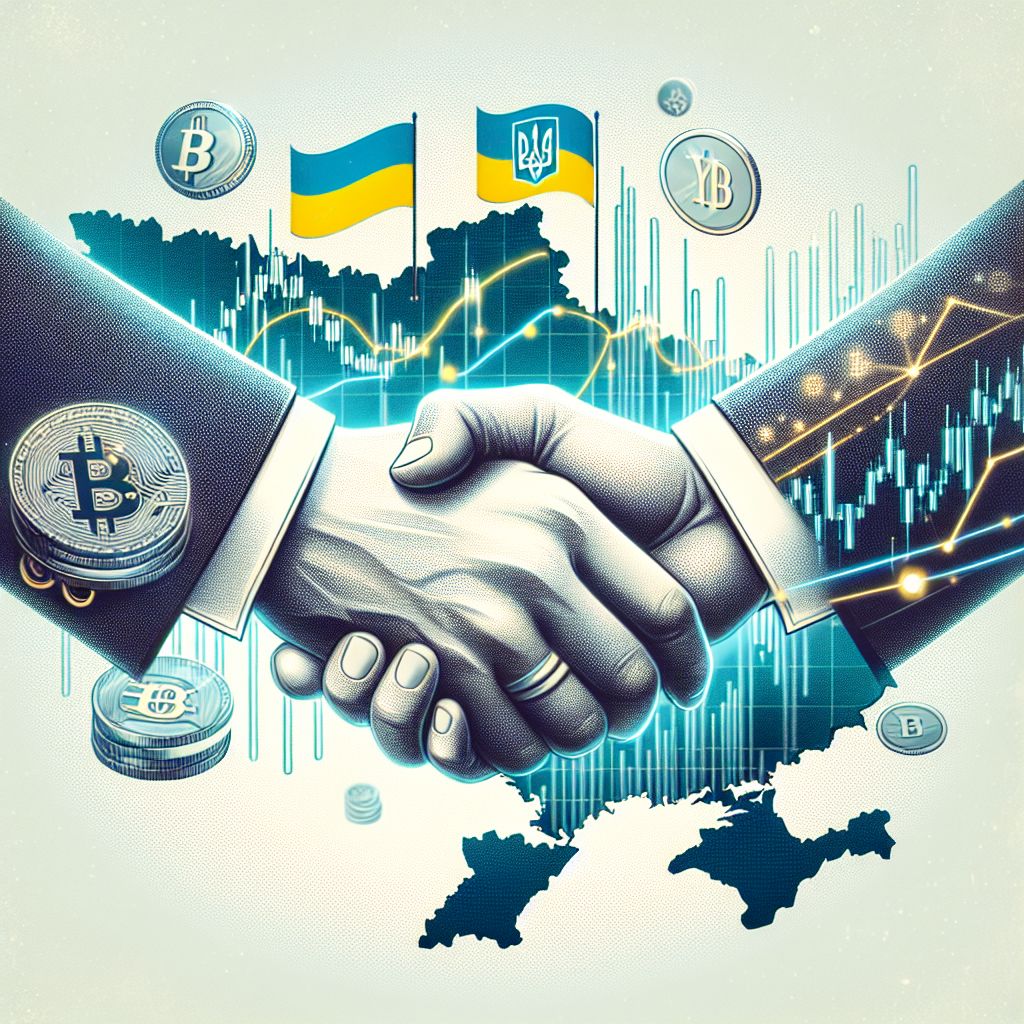
For cryptocurrency markets — which have spent parts of 2024–2025 navigating a mix of regulatory developments, macro tightening cycles, and episodic risk-off shocks — any durable reduction in geopolitical uncertainty could be an important catalyst. That said, the transmission from ceasefire headlines to sustained crypto gains is neither automatic nor guaranteed.
Immediate market reaction: risk-on dynamics
A credible de-escalation tends to produce a familiar sequence across financial markets. The main mechanics that could lift crypto prices in the near term include:
- Lower demand for traditional safe havens (US Treasuries, the US dollar), freeing capital for higher-beta assets.
- Reduced equity and FX volatility, which historically correlates with stronger performance in risk assets like Bitcoin and major altcoins.
- Investor rotation from defensive holdings back into growth-oriented assets, supporting short-term rallies in digital assets.
In practice, these moves often show up first as sentiment-driven inflows: spot buying, heightened futures activity, and rising funding rates. Smaller-cap and higher-volatility tokens typically outperform during relief rallies, while Bitcoin and large-cap tokens often lead on liquidity and institutional flows.
What to expect in the first 24–72 hours
- Volatility compression across equity and crypto implied vols.
- Spike in trading volumes as traders reposition from safe-haven assets.
- Temporary discount compression between spot and futures markets as leverage returns.
Macro transmission: energy, inflation, and rates
One of the strongest channels through which a ceasefire could affect crypto is the commodity and inflation pathway. The Russia–Ukraine conflict has been a recurring driver of energy market stress. A meaningful and sustained de-escalation would likely:
- Stabilize or lower energy price volatility, easing inflationary pressures in energy-importing regions.
- Weaken the near-term case for aggressive central bank tightening, which could open room for looser liquidity conditions.
- Reduce geopolitical premia embedded in bond yields and currency valuations.
However, central bank reaction functions in 2025 remain key. Policymakers are balancing persistent structural issues — such as labor market tightness and service-sector inflation — against disinflationary signals from commodities. If inflation proves stickier than hoped, central banks may maintain restrictive stances, limiting the upside for risk assets even after geopolitical relief.
Limits to a sustained crypto recovery
Even with a favorable ceasefire outcome, several constraints could temper or reverse an initial crypto rally:
- Monetary policy uncertainty: If major central banks (including those in the US, EU, and Japan) keep policy restrictive or surprise markets with hawkish guidance, liquidity will remain constrained.
- Derivative positioning and leverage: High leverage and crowded directional bets can amplify reversals. Relentless funding-rate spikes may attract speculative flows that unwind quickly if macro data disappoints.
- Structural market flows: Institutional participation — including ETFs, custodial demand, and on-chain treasury management — will determine whether inflows persist beyond sentiment-driven moves.
- Regulatory developments: Evolving crypto regulation in major jurisdictions remains a wildcard. Clarity can unlock capital, but restrictive rulings may dampen appetite.
In short, while a ceasefire could remove an important tail risk, it does not eliminate macro and market-specific headwinds that have influenced digital asset returns throughout 2024–2025.
Market indicators to watch
To assess whether initial rallies are sustainable, market participants should monitor a mix of macro, on-chain, and market-structure indicators:
- Energy prices and futures curve — to gauge pass-through to headline inflation.
- Real yields and sovereign bond flows — signals of global liquidity conditions.
- Exchange reserves and stablecoin supply — measures of sell-side pressure and liquidity buffers.
- Funding rates, open interest, and derivatives basis — to spot excessive leverage.
- Net flows into institutional products and custodial demand — for structural adoption trends.
- On-chain activity metrics (active addresses, transaction value, network fees) — to check real economic usage versus speculative trading.
Scenarios for crypto through 2025–2026
Multiple outcomes are possible depending on how geopolitics and macro policy interact. Below are three plausible scenarios and their likely implications for cryptocurrencies.
1. Short-term relief, then re-test (most likely)
- Ceasefire reduces immediate tail risk, sparking a relief rally across risk assets.
- Without clear central bank easing or steady institutional inflows, rallies fail to break higher and markets re-test prior ranges.
- Crypto volatility falls but remains elevated relative to traditional assets.
2. Sustained rally supported by disinflation
- Energy prices normalize, inflation trends downward, and major central banks pivot or pause tightening more than expected.
- Liquidity conditions improve, enabling durable gains in crypto with broad-based participation across coins.
- Institutional flows (spot buying, custody) accelerate and on-chain metrics show sustained growth.
3. Limited impact due to other macro shocks
- Even with a ceasefire, an unrelated macro shock (EM crisis, durable inflation) keeps risk premium elevated.
- Crypto reacts positively to headlines but faces headwinds from higher yields or regulatory setbacks.
- Market structure fractures lead to narrow rallies concentrated in liquid large-cap tokens.
Implications for traders and long-term investors
Participants should align positioning with time horizons and the prevailing scenario. Practical considerations include:
- For short-term traders: monitor volatility, funding rates, and macro releases closely; use prudent stop-losses to guard against rapid re-pricing.
- For medium-term investors: watch liquidity signals (ETF inflows, custody growth) and macro trends (real yields, inflation); avoid overleveraging into relief rallies.
- For long-term holders: a ceasefire may improve the macro backdrop, but long-term allocation decisions should still be informed by fundamentals such as adoption, network utility, and regulatory clarity.
2025 takeaways for the crypto ecosystem
The prospect of a Russia–Ukraine ceasefire in 2025 underscores a recurring theme for digital assets: crypto markets are sensitive to geopolitical shocks, but their path depends on broader macro and structural dynamics.
- Geopolitical de-risking can catalyze strong short-term rallies, particularly for high-beta tokens.
- Sustained appreciation requires a supportive macro regime — notably stable or falling inflation, accommodative or neutral monetary policy, and ample liquidity.
- Regulatory clarity and growing institutional infrastructure remain critical to turning episodic rallies into long-term market expansion.
Key signals to follow next
As markets digest diplomatic developments, the most informative signals will be:
- Concrete steps on implementation and verification of any ceasefire (multinational monitoring, timelines).
- Energy-market responses and subsequent inflation prints in major economies.
- Central bank communications and policy decisions in the US, EU, and Japan.
- Net flows into and out of major crypto products and changes in on-chain usage patterns.
For market participants, staying attuned to these indicators will help distinguish headline-driven rallies from structural shifts that support sustainable appreciation in digital assets.
Conclusion
A credible Russia–Ukraine ceasefire in 2025 would likely reduce a key geopolitical risk and could prompt a notable risk-on move in cryptocurrency markets. Yet the durability of any gains depends heavily on macro developments — energy prices, inflation trends, and the trajectory of global liquidity — as well as market structure factors like leverage and institutional participation.
Traders and investors should combine macro monitoring with market-specific metrics to navigate the evolving landscape and assess whether relief rallies represent buying opportunities or transient sentiment shifts.
Disclaimer: This post is a compilation of publicly available information.
MEXC does not verify or guarantee the accuracy of third-party content.
Readers should conduct their own research before making any investment or participation decisions.
