


In the crypto market, Altcoin Season is always the moment retail investors wait for, the phase when capital rotates out of Bitcoin and flows aggressively into altcoins, pushing prices higher through a cascading cycle. However, this cycle no longer operates like previous ones. The maturation of institutional capital, clearer regulations and the emergence of new financial products have completely changed the way altcoins break out.
1. The ETF Landscape and the Institutional Capital Infrastructure
Since the launch of Bitcoin Spot ETFs at the beginning of 2024, the crypto market has entered a new era. The inflow of more than 170 billion USD into Bitcoin Spot ETFs by October 2025 confirmed Bitcoin’s dominance in global asset allocation and pushed BTC to over 59 percent crypto market share. Ethereum ETFs also became a major milestone after attracting 32 billion USD in assets, reshaping the structure of institutional flows.

But that was only the beginning. After BTC and ETH, a large wave of other altcoins began receiving ETFs: Solana ETF leads the entire market
- Bitwise BSOL launched in October 2025
- VanEck, 21Shares, Fidelity and others released 11 to 16 additional ETFs
- SOL became the most ETF-adopted altcoin in history
XRP ETF became a breakout after 10 years of waiting
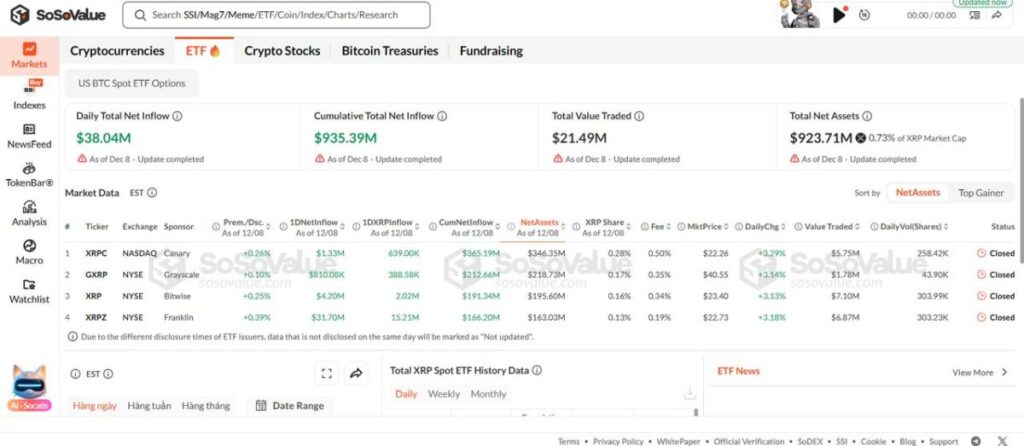
- Canary Capital and Bitwise launched XRP ETFs in November 2025
- First day volume reached 250 to 580 million USD
- Inflow exceeded 1 billion USD within the first week
Other altcoins
- Litecoin ETF, DOGE ETF, Cardano ETF, HBAR ETF: pending approval or launched in limited formats
- Many altcoin basket ETFs (20-asset or thematic ETFs) began appearing
2025 officially became the year of the “Altcoin ETF Boom,” even more significant than the introduction of BTC and ETH ETFs.
In the past, before crypto ETFs existed, traditional investors wanting exposure to digital assets had to rely on:
- GBTC (Grayscale Bitcoin Trust)
- MicroStrategy stock (MSTR)
- DATs (Digital Asset Treasuries), companies that held altcoins such as ETH, SOL, XRP
DATs acted as the “stone-age ETFs,” a temporary bridge for traditional money entering altcoins. But DATs carried risks such as MNAV below 1, low liquidity and high leverage, causing altcoin prices to swing violently when DATs were forced to sell assets. The rise of Altcoin ETFs from late 2024 to 2025 replaced the DAT model entirely and shifted crypto into a more transparent and less systemically risky structure.
2. Altcoin ETFs and Their Impact on Altcoin Price Structure
In the modern market, launching a new altcoin no longer creates the same explosive momentum seen during the early ETF era. However, Altcoin ETFs such as XRP ETF, SOL ETF, LTC ETF and even memecoin ETFs like DOGE have become new magnets for large-scale capital. An altcoin that receives its own ETF is seen as having higher credibility and becomes a signal of institutional-grade quality.
2.1. Direct Buy Pressure and Price Benchmark Formation
Altcoin ETFs operate using the Creation and Redemption mechanism. When ETF demand increases: The fund must purchase real altcoins on the market, which creates direct buy pressure. The price of altcoins inside the ETF becomes a benchmark that reduces extreme volatility.
For example, if an ETF holds ETH, SOL and ADA, then strong inflows into the ETF will lift all three assets simultaneously. This impact extends throughout their ecosystems and becomes a core driver of Altseason.
2.2. Network Effect: Growth Expansion Across the Entire Market
When altcoin prices inside ETFs rise, a chain reaction begins: Investors start FOMO and buy additional altcoins outside the ETF basket. Capital spreads from large-cap altcoins to midcaps and later to lowcaps. The entire market enters a broad-based uptrend, which is the signature of Altseason.
Previous cycles show that Altseason only needs 5 to 8 leading altcoins to ignite, and the momentum later expands to hundreds of assets.
2.3. Impact on Derivatives Markets
Altcoin ETFs also influence derivatives markets significantly: ETF inflows push funding rates higher and create long and short imbalances. Traders exploit arbitrage between ETF, spot and perpetual markets, increasing liquidity. Open interest rises and funding remains positive, which is an early signal for Altseason.
Growth in OI for altcoin futures is often the earliest indicator of new institutional capital.
3. The Expansion and Contraction Cycles of Altcoin ETFs
Altcoin ETFs not only generate growth but also come with clear contraction phases. This section explains both sides of the cycle.
3.1. Growth Scenario
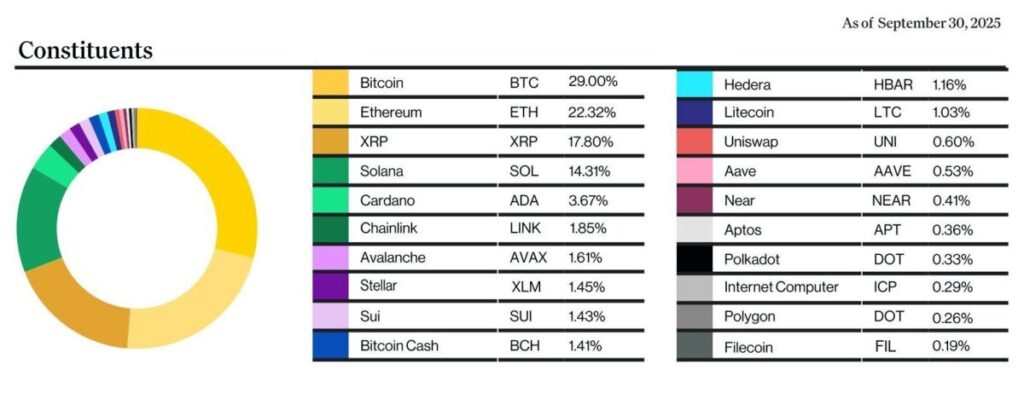
Altcoin ETFs can create large liquidity waves: ProShares CoinDesk 20 ETF tracks strong altcoins such as HBAR, ICP, XRP and SOL, attracting institutional inflows. There are currently 155 ETPs tracking 35 cryptocurrencies awaiting approval. ETF inflows increase demand for DATs with higher beta, leading DATs to accumulate more altcoins, creating a dual price expansion effect. Major issuers such as BlackRock, Fidelity, VanEck and Grayscale provide safe access that brings unprecedented capital into altcoins.
3.2. Contraction Scenario
There are phases when capital does not flow into altcoins: The CoinDesk 20 Index shows BTC and ETH make up more than 50 percent, while altcoins like ICP and FIL account for only 0.2 percent. Weak inflows make it difficult for altcoins to gain momentum. When new ETFs launch, strong flows from DAT to ETF can push DAT MNAV below 1, forcing DAT to sell altcoins and creating short-term sell pressure. Altcoin ETFs also frequently experience sell-the-news behavior within 24 to 72 hours of listing.
4. Macro Factors: 300 Billion USD Stablecoin Liquidity and ETF Capital Flow Effects
By October 2025, the market had 300 billion USD in stable coins in circulation, forming an enormous liquidity infrastructure. Combined with Altcoin ETFs, institutional capital can generate strong leverage effects: Each dollar of ETF inflow often multiplies total market capitalization several times. If Altcoin ETFs are well received, billions of dollars can be activated. DeFi benefits significantly, including tokens like LINK, HBAR and stake-oriented ETFs such as REX-Osprey for TAO, INJ, AVAX and SUI.
As the USD weakens and risk assets rise sharply, ETFs help institutions rotate capital: BTC to large-cap altcoins to midcaps to DeFi.
However, monitoring DAT funding capabilities and MNAV mechanics remains important. If MNAV drops below 1, sell pressure increases and temporarily reduces the growth effects brought by Altcoin ETFs.
5. Top 3 Altcoin ETFs and Why They Are Key Drivers of Altseason
During the 2025 Altcoin ETF wave, not all products successfully attracted institutional capital. The three ETF groups below are reshaping the market and are considered the most influential for the 2026 Altseason cycle.
- Solana ETF is the most prominent. With more than 23 ETFs or ETPs related to SOL, the highest number among the 155 altcoin ETP filings, Solana has become the preferred choice for institutions due to its high performance, growing ecosystem and strong scalability. Funds such as Bitwise, VanEck and 21Shares launched multiple versions ranging from spot to covered call and staking ETFs, turning SOL into a core allocation for many institutional portfolios. This capital inflow spreads across the Solana ecosystem and fuels growth in DePIN, AI and consumer applications.

- XRP ETF became a highlight due to regulatory advantages after its legal victory against the SEC. The ETF from Canary Capital and Bitwise reached 250 to 580 million USD in first-day volume, proving real demand from conservative investors. Although XRP’s price has not surged dramatically, the ETF improved liquidity and strengthened XRP’s role as a legally recognized global settlement asset. This has positive spillover effects on related tokens such as XLM, HBAR and ALGO
- The final category includes multi-asset ETFs such as the ProShares CoinDesk 20 ETF and REX-Osprey 21-Asset ETF. These serve as safe entry points for institutional investors wanting diversified crypto exposure. They allocate capital to both bluechips and midcaps while adding yield through staking, creating a broader market impact than single-asset ETFs. As BTC dominance begins to decline, these ETFs will become the bridge that channels capital into altcoins, laying the foundation for a much stronger Altseason in 2026.
Conclusion
Altcoin ETFs are not merely new financial products. They are macro catalysts capable of activating a completely new Altseason cycle. With the rapid growth of ETFs, massive stablecoin liquidity and increasing institutional participation, the market is entering its most structurally promising phase since 2021.
Disclaimer:This content does not constitute investment, tax, legal, financial, or accounting advice. MEXC provides this information for educational purposes only. Always do your own research, understand the risks, and invest responsibly.