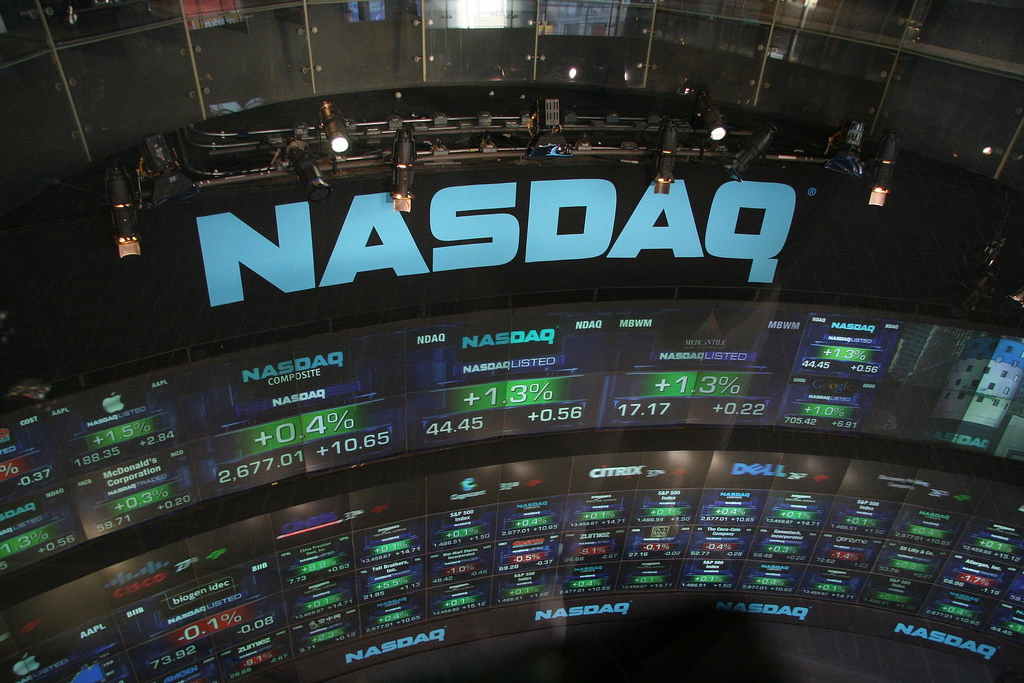
Over the years, the application of blockchain in traditional finance (TradFi) has always been a hot topic, but most efforts have remained at the level of testing, pilots, or limited projects run by banks and financial institutions. However, everything may change quickly as Nasdaq — one of the largest stock exchanges in the world — has officially submitted a filing to the U.S. Securities and Exchange Commission (SEC) seeking approval to launch tokenized stock trading.
If approved, this would be the largest tokenization project for stocks ever implemented in the United States, marking a major turning point in the structure of global equity markets. Not crypto. Not experimental “virtual assets.” These are real stocks, with full legal characteristics and shareholder rights, but represented as tokens on a blockchain.
This article delves deeply into the overall context, objectives, operating mechanism, opportunities, risks, and macro-level impacts of this historic proposal.
1. Why is Nasdaq deciding to “tokenize” stocks right now?
Pressure from technology and shifting investor behavior
The rise of digital assets, stablecoins, 24/7 trading, and the growth of decentralized exchanges (DEXs) has highlighted one reality: investors increasingly want assets that are more flexible, faster to trade, and more transparent.
Meanwhile, the traditional U.S. clearing and settlement system (DTCC) — though robust — is still considered slow, complex, and costly:
- Settlement has moved from T+2 to T+1, but it still cannot achieve real-time processing.
- The clearing process still relies on numerous intermediaries.
- Liquidity risk and counterparty risk still exist.
Nasdaq sees an opportunity to modernize the system without disrupting the existing market structure — a pragmatic step to adapt to the changing era.
2. Nasdaq reassures the market: “We do not intend to change the U.S. financial system.”
What Nasdaq emphasizes is this: tokenization is not meant to replace traditional stocks.
Instead, the two systems will run in parallel. Investors will have the option to:
- trade stocks as they do today,
- or trade the tokenized version.
Nasdaq highlights four core characteristics of tokenized stocks:
1. Real stocks, not “simulated” tokens Each token corresponds to a fully custodied stock, assigned a CUSIP number just like the original security.
2. All shareholder rights remain intact
- voting rights
- dividend rights
- rights to attend shareholder meetings Blockchain simply serves as the ledger that records ownership.
3. Trading still follows U.S. securities laws This is not DeFi, not free-floating crypto. Tokenized stocks are supervised just like traditional equities.
4. Blockchain can accelerate the system without disrupting current laws Nasdaq is modernizing the infrastructure layer, not altering the nature of the asset.
3. How do tokenized stocks work? – Technical and legal architecture
Based on Nasdaq’s filing with the SEC and related analytical reports, the operational structure may include:
• Permissioned blockchain (private, institution-operated) This does not use public blockchains like Ethereum or Solana. Instead, Nasdaq or a licensed entity will operate a private chain.
• Real assets custodied by a licensed custodian The custodian holds the original shares → issues the equivalent tokens.
• Order book remains inside Nasdaq This is a major difference from crypto. The exchange still serves as the central matching engine.
• On-chain settlement Trade settlement occurs on the blockchain, reducing processing time from hours/days to seconds.
• 100% compatibility with the U.S. market infrastructure Tokenization does not create a new market. It is an upgraded version of the existing one.
4. Expected benefits: Why tokenization is the future
4.1. Superior processing speed
Blockchain removes many layers of intermediaries, enabling:
- Near-instant trade → settlement
- Reduced counterparty risk
- Lower operational costs across the entire system
In finance, speed almost always translates directly into money.
4.2. Transparency and real-time auditability
Blockchain provides:
- public (or semi-public) transaction logs
- immutable data
- automated audit capabilities
This is something traditional stock systems have never been able to achieve.
4.3. Transforming stocks into “dynamic assets”
Tokenized stocks can:
- be easily fractionalized
- trade 24/7
- be used as collateral in digital finance applications
- be transferred instantly between institutions
This could unlock an entirely new expanded financial ecosystem.
4.4. Enhancing U.S. market competitiveness
Nasdaq does not want to fall behind the EU and Singapore — regions that already have legal frameworks for tokenization.
If the U.S. does not innovate, technological capital and digital assets may flow abroad. Tokenization is the path for the U.S. to maintain its leadership role.
5. Risks, controversies, and objections – What is the SEC worried about?
Nasdaq wants to move fast. But regulators are far more cautious.
Below are the concerns raised by the SEC and other exchanges:
5.1. Who is responsible for securing the private keys of the assets?
If a token is lost or hacked — who bears the liability?
5.2. Liquidity fragmentation
If the same stock is traded on:
- the traditional market
- the tokenized market
prices may diverge, causing volatility and instability.
5.3. Legal risks and custody standards
Clear rules are needed for how ownership of the underlying real asset transfers when the token moves.
5.4. Concerns about crypto “evading regulations”
Some traditional exchanges warn that tokenization must not become a “backdoor” for crypto platforms to bypass regulatory requirements.
5.5. Blockchain scalability has not been proven at massive volume
Nasdaq processes more than 200 billion trade messages per day — any blockchain used must meet this standard.
6. Why is Nasdaq’s proposal drawing global attention?
This is not a pilot project. Nasdaq is the backbone of the U.S. financial market.
If Nasdaq tokenizes stocks:
- The entire brokerage industry will have to change.
- ETFs, pension funds, and hedge funds will need to update their custody systems.
- Banks and financial institutions must become blockchain-compatible.
- The NYSE may have no choice but to follow.
In other words: this is a quiet, large-scale “overhaul” of the entire U.S. financial system — even if Nasdaq insists they are “not disrupting the system.”
7. When could this be implemented? – Forecast: 2026–2027
According to internal sources and expert predictions:
- The SEC will need several months to review the proposal
- Lawmakers will also monitor the process closely
- Nasdaq expects implementation could begin in 2026
- The initial phase may apply only to selected blue-chip stocks or ETFs
If successful, it could establish a new global standard.
8. Long-term impact: Tokenization will become the standard for global assets
Many major institutions such as BlackRock, JPMorgan, Goldman Sachs, and HSBC are already researching tokenization.
Larry Fink — CEO of BlackRock — has stated:
“Tokenization is the future of the asset market.”
If Nasdaq’s proposal is approved, it will be the strongest endorsement of that belief.
In the future, we may see:
- Tokenized stocks
- Tokenized bonds
- Tokenized ETFs
- Tokenized pension funds
- Tokenized real estate
And all of them traded, custodied, and settled on blockchain.
Conclusion
Nasdaq’s proposal to tokenize stocks is not just a technological advancement. It is a strategic move to restructure the U.S. financial market — upgrading the trading infrastructure to a new blockchain-based generation while preserving the traditional system.
If the SEC gives the green light, the market will enter a historic transition: from paper-based assets → to digital assets — but under strict and secure regulation.
The future of finance may be shaped by this very step.
Disclaimer:The information provided here is for informational purposes only and should not be considered financial, investment, legal, or professional advice. Always conduct your own research, consider your financial situation, and, if necessary, consult with a licensed professional before making any decisions.
Join MEXC and Get up to $10,000 Bonus!
Sign Up